June 24, 2026
⋅
4
min read


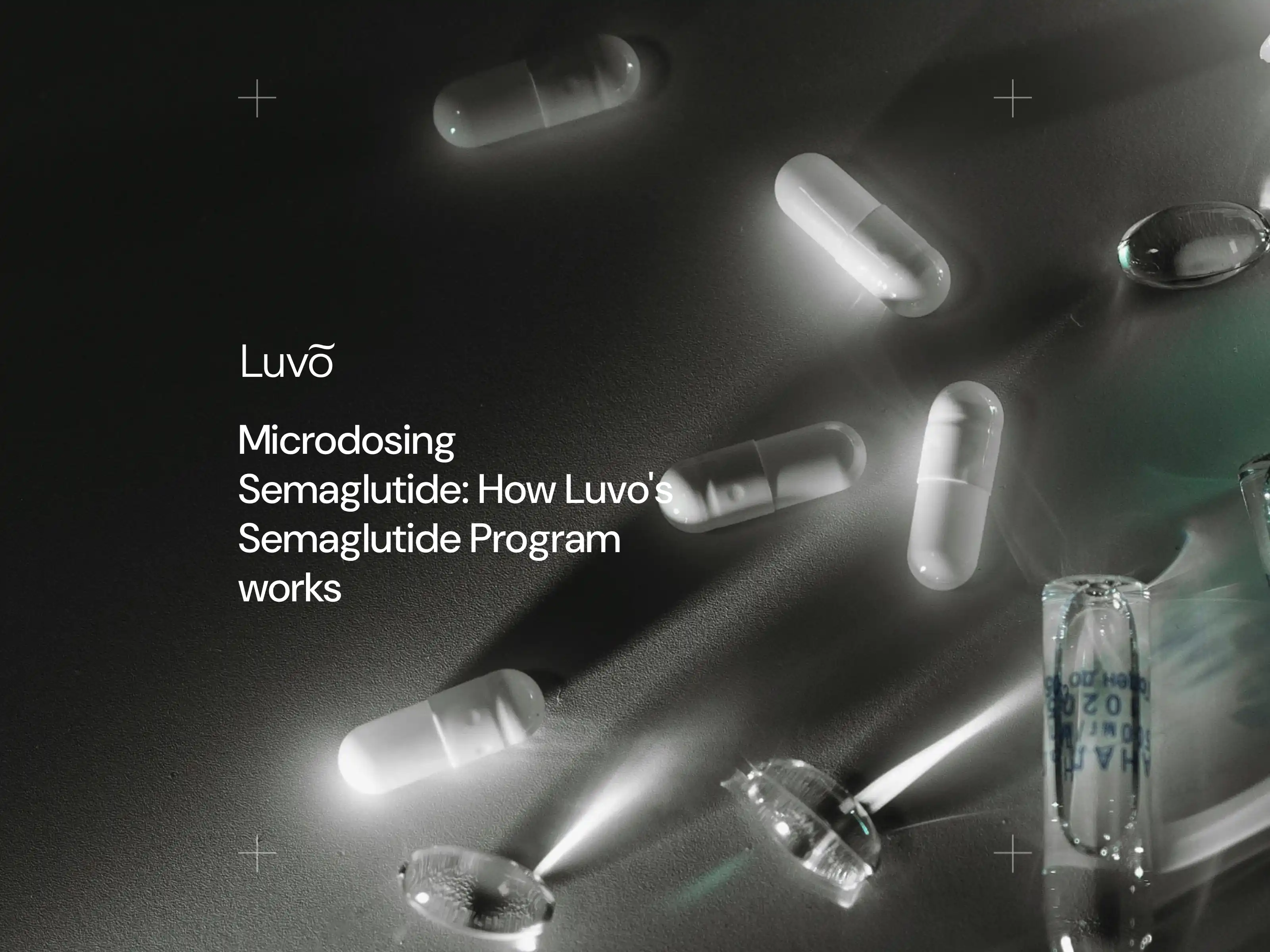
Semaglutide is one of the most widely used GLP-1 medications. It was originally developed for type 2 diabetes (branded Ozempic) and later approved at higher doses for weight management (branded Wegovy), a distinction worth understanding if you're comparing the two. Luvo's Microdosing Program uses a lower-dose, clinician-guided approach and offers it in both injection and tablet form.
This is an educational overview. It isn't medical advice or a promise of a specific result.
Semaglutide is a GLP-1 receptor agonist, meaning it mimics GLP-1, a hormone the body releases after eating. By activating GLP-1 receptors, it acts on the brain's appetite signaling to reduce hunger and increase fullness, slows how quickly the stomach empties, and supports insulin signaling, which is why it was first developed for diabetes. Describing this mechanism is education, not a claim about results for any individual.
Standard semaglutide protocols titrate toward a target maximum dose over several months. A microdosing approach instead works with a lower dose and adjusts based on how a person responds, under a provider's guidance, rather than following a fixed schedule to the maximum. Whether a lower dose is appropriate is a clinical decision.
The gastrointestinal side effects of GLP-1 medications tend to be dose-related, meaning they're generally more likely at higher doses. That general pattern is the main reason a lower-dose approach is discussed at all, though side effects can still occur at any dose and vary from person to person. Tolerability, cost, and long-term sustainability are also part of the conversation for some people. None of this means a lower dose is right for everyone; whether it fits, and at what dose, is a clinical decision made with a provider.
Microdosing semaglutide is still medical treatment, and the eligibility criteria are the same as for standard dosing: a provider considers your weight, health history, current medications, and contraindications. GLP-1 medications aren't appropriate for everyone, and screening covers situations such as a personal or family history of medullary thyroid carcinoma, Multiple Endocrine Neoplasia syndrome type 2, a history of pancreatitis, and pregnancy or breastfeeding. The difference with microdosing is in how treatment is delivered, not in who qualifies.
Most people notice appetite changes before anything else, but experiences vary, and we don't attach numbers or timelines to that. A lower-dose approach is adjusted based on how you respond rather than pushed to a fixed maximum, and it works best alongside nutrition, hydration, movement, and regular check-ins rather than on its own. Plateaus and adjustments are a normal part of the process.
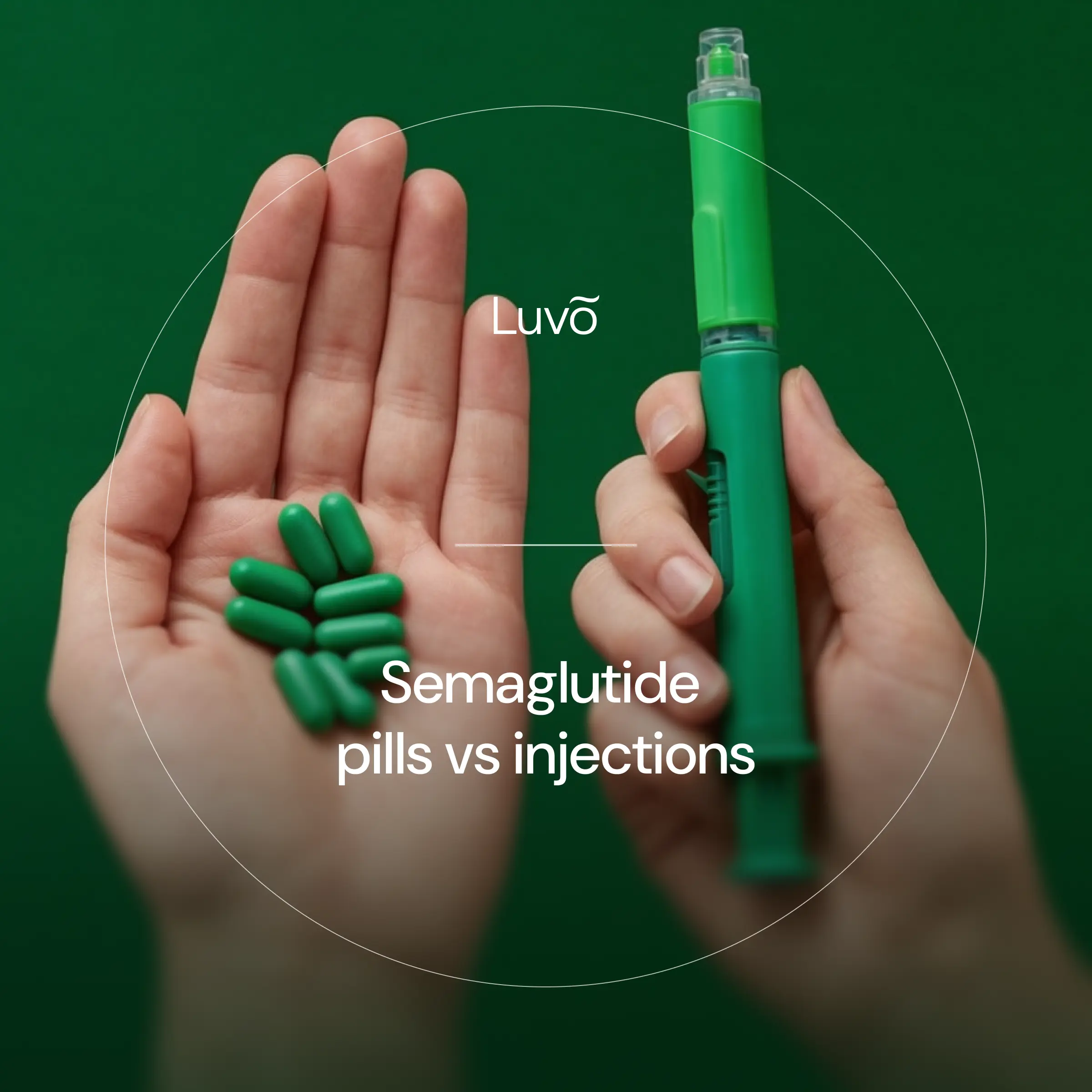
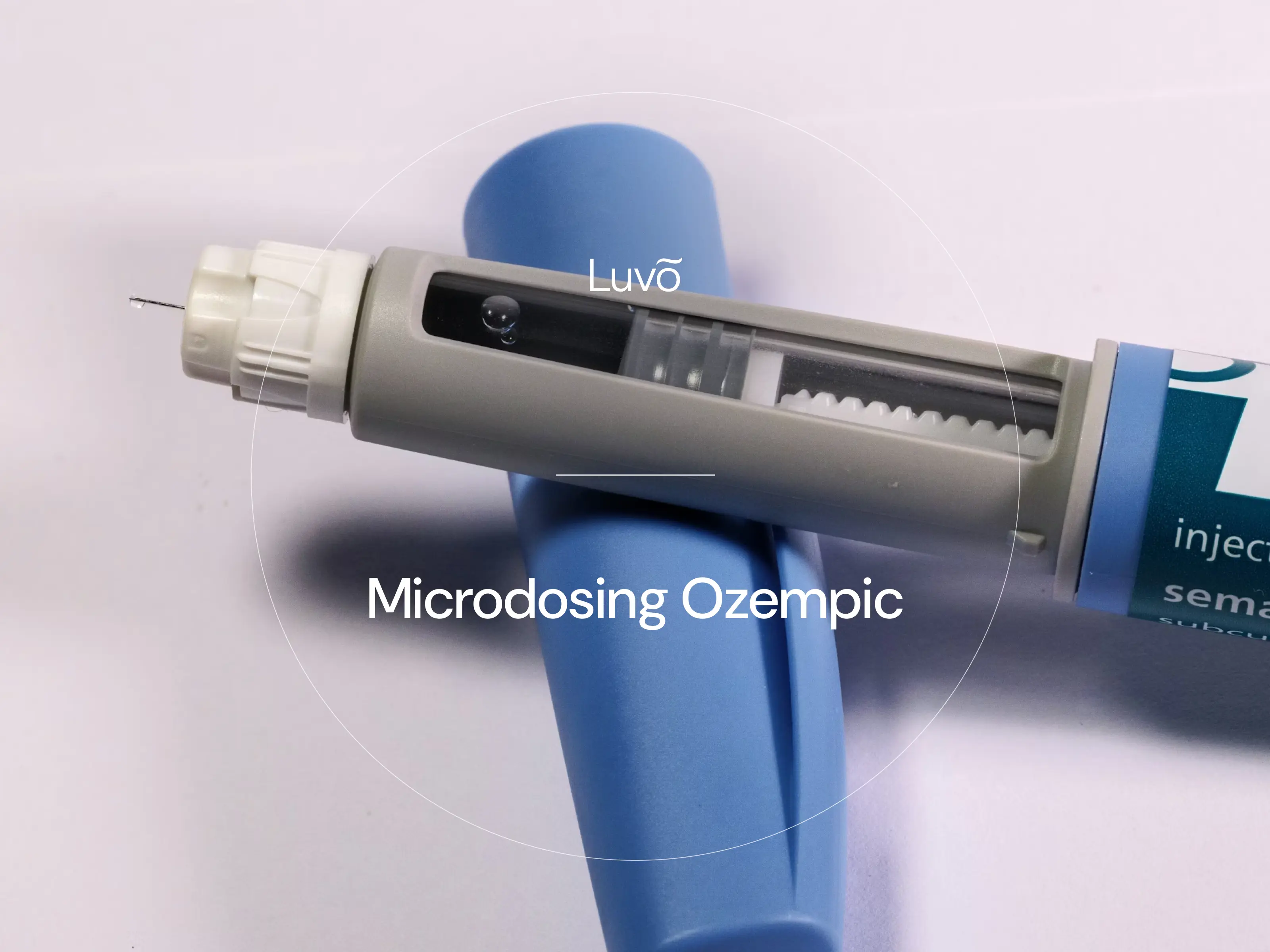
Luvo offers Microdosing Semaglutide in two forms. The injection is given once weekly under the skin. The tablet is taken orally and has specific instructions (an empty stomach, a small amount of water, and a wait before eating) to support absorption. Both contain semaglutide, and a provider helps determine which suits your situation. The trade-offs between the two formats come down to routine more than anything else.
Gastrointestinal effects (nausea, constipation, or stomach discomfort) are the most common, especially early on. Smaller and slower meals, consistent hydration, and gentle fiber tend to help. Some symptoms need medical attention rather than home management, including severe or persistent vomiting, signs of dehydration, or severe abdominal pain, and this class carries a boxed warning related to thyroid C-cell tumors based on animal studies, which is one reason a provider reviews your history first. Don't adjust your dose on your own.
Semaglutide is a prescription medication, and the compounded formulation a provider may prescribe is not FDA-approved; a licensed provider reviews your health history and determines whether it's appropriate before prescribing.
Is microdosing semaglutide the same as a full dose?
No. It uses a lower-than-standard dose, adjusted to how a person responds under a provider's guidance, rather than titrating to a fixed maximum. Whether a lower dose is appropriate is a clinical decision.
Does a lower dose mean fewer results?
We don't attach outcome claims or numbers to any dose. The right dose is the one a provider determines is appropriate for you, and results vary from person to person regardless.
Injection or tablet, which is better?
Both deliver the same active ingredient. The better option is usually the one you can keep to consistently, and a provider helps you decide.
Is compounded semaglutide FDA-approved?
No. Compounded medications are not FDA-approved, and the FDA does not evaluate them for safety, effectiveness, or quality. A provider explains that status before prescribing.
If a lower-dose approach sounds relevant, the next step is a conversation with a licensed provider who can review your health history and decide whether semaglutide, and what dose and format, fit you. Nothing is prescribed or shipped without that review.
Explore Luvo's Microdosing Program.
This article is for educational purposes only and is not medical advice. Compounded medications are not FDA-approved. Always consult a licensed healthcare provider to determine whether any treatment is appropriate for you.




.webp)