September 22, 2026
⋅
4
min read


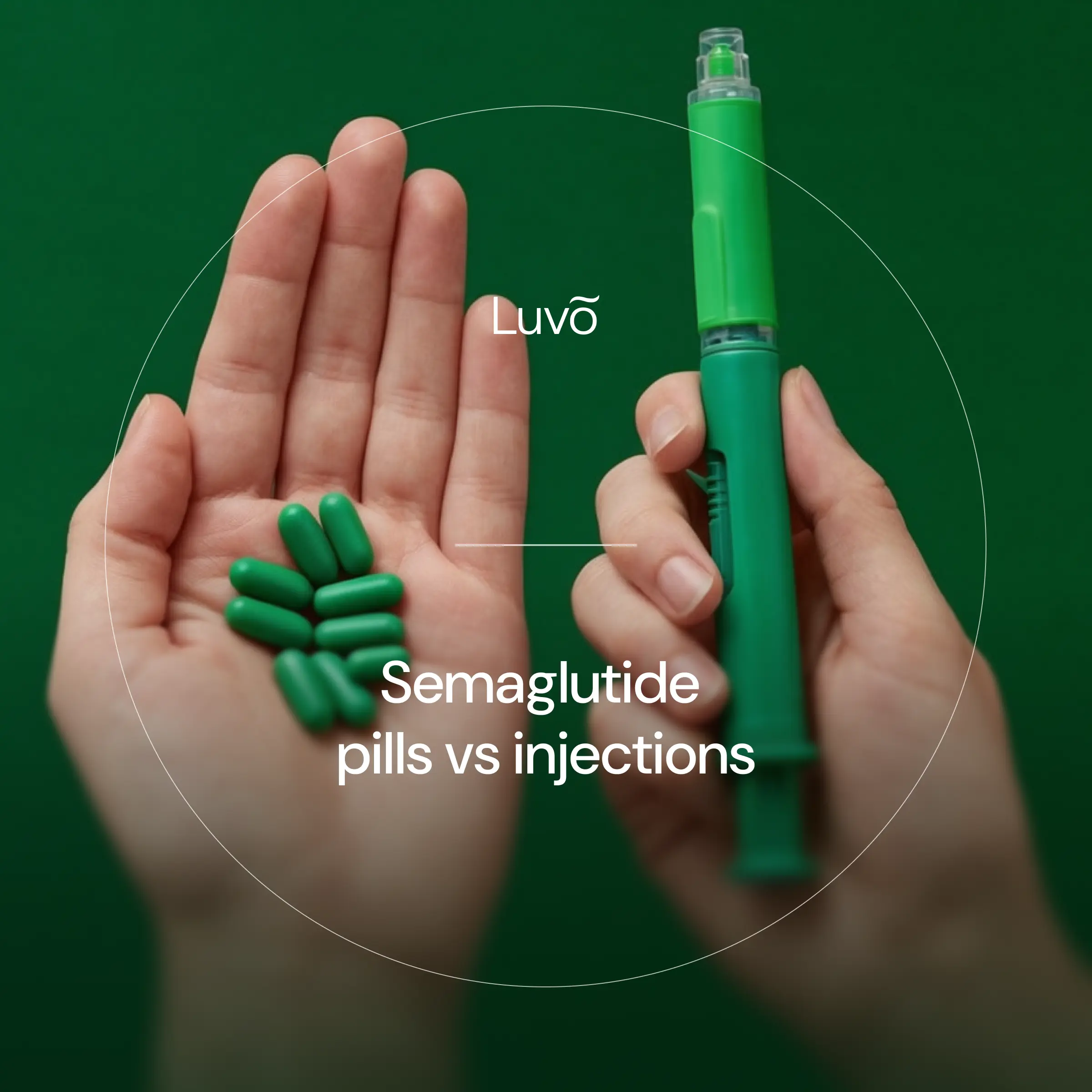
Semaglutide now exists in two forms: a once-weekly injection and a once-daily tablet. Until recently the tablet was a diabetes medication only. That changed at the end of 2025, and the choice between a pill and an injection is now a real one for weight management.
This article explains how the oral form works, how the two compare, what the studies found, and how dosing differs. It is educational and not medical advice. Which form suits you, if either does, is a decision for a licensed provider.
Semaglutide is a large molecule. Swallowed on its own it would be broken down in the stomach before any meaningful amount reached the bloodstream. The oral formulation solves this by pairing semaglutide with an absorption enhancer called SNAC.
SNAC raises the pH in a small area of the stomach lining right around the tablet. That local change protects the molecule from acid and from the enzyme pepsin, and helps it cross into the bloodstream from that spot [1].
Even with SNAC, absorption is inefficient. Oral bioavailability sits at roughly 1%, against about 89% for the injection [1]. That single fact explains most of what follows, including why the oral doses are numerically so much larger.
Why the empty stomach rule exists. Food, other drinks, and other medications all interfere with that narrow absorption window. The standard instruction is to take the tablet on waking with no more than a small sip of plain water, then wait before eating, drinking, or taking anything else. This is not a soft recommendation. Skip it and absorption drops sharply.
Rybelsus is the branded oral semaglutide approved for type 2 diabetes, at lower strengths. It is a different product with a different indication from the weight management tablet.
This table describes the FDA-approved products.
The honest summary is that neither form is better. They trade different inconveniences. A weekly injection is four actions a month with no timing rules. A daily tablet is thirty actions a month, each with a timing rule, and no needle.
Results vary between individuals regardless of form.
Two trials matter here.
OASIS 1 studied oral semaglutide 50 mg once daily in 667 adults with overweight or obesity and without type 2 diabetes. At 68 weeks, participants on the tablet lost 15.1% of body weight, against 14.9% for the weekly 2.4 mg injection in its own separate trial [2, 3]. In OASIS 1, 85% of participants on the tablet reached at least 5% weight loss, compared with 26% on placebo [2].
OASIS 4 tested the 25 mg dose over 64 weeks in 307 adults with obesity or overweight and at least one weight-related condition. Mean weight reduction was 16.6% among those who stayed on treatment, and 13.6% when the analysis included everyone regardless of whether they stopped [4].
That second pair of numbers is worth pausing on. The gap between 16.6% and 13.6% is not a measurement quirk. It is what happens when you count the people who discontinued. Real-world results tend to land closer to the second figure than the first.
On the strength of OASIS 4, the FDA approved once-daily oral semaglutide 25 mg for chronic weight management in December 2025, the first oral GLP-1 approved for that use [4]. The approval also covers reducing the risk of major adverse cardiovascular events in adults with overweight or obesity and established cardiovascular disease.
Like any prescription medication, semaglutide in either form carries risks and possible side effects, and a provider will go through those with you before anything is prescribed.
Doses come from the product labeling and from the trials above. Your provider determines your dose, and nothing here substitutes for that.
The oral weight management product starts at a low strength and steps up over several months, with four strengths available up to 25 mg [4]. The escalation exists to let tolerability catch up.
The oral diabetes product uses much lower strengths and a different schedule.
The weekly injection titrates from 0.25 mg up to 2.4 mg over roughly four months.
Do not read across between these numbers. A 25 mg tablet and a 2.4 mg injection are not comparable quantities, because roughly 1% of the tablet dose is absorbed against roughly 89% of the injected dose [1]. The large oral number is the formulation compensating for the absorption problem, not a stronger treatment.
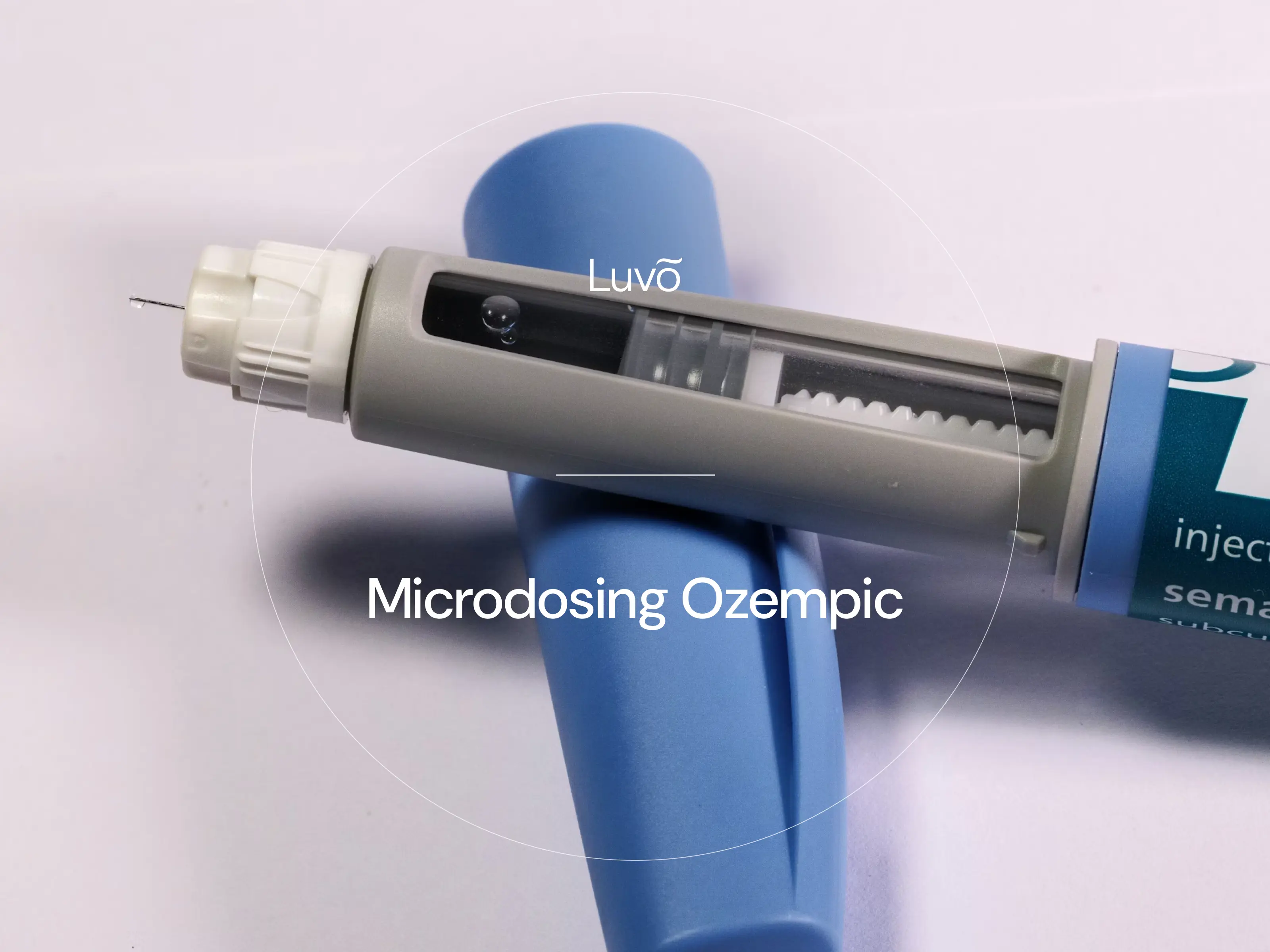
Some providers prescribe GLP-1 medications at lower doses than the standard escalation schedule, an approach often called microdosing. That is a clinical decision made case by case by a licensed provider.
Compounded oral semaglutide is prepared by licensed compounding pharmacies. It is not FDA-approved, and the FDA does not evaluate compounded drugs for safety, effectiveness, or quality. The trial results and dosing above describe the approved products and should not be read as describing a compounded preparation.
A provider weighs these. You cannot decide it from an article.
A tablet may fit someone with a real aversion to needles, someone who already has a fixed morning routine, or someone who travels in ways that make refrigeration awkward.
An injection may fit someone whose mornings are unpredictable, someone who would rather think about a medication once a week than every day, or someone who knows they will not reliably keep the empty stomach window.
That last point deserves weight. The best-absorbed medication is the one actually taken correctly. A daily tablet taken loosely may deliver less than a weekly injection taken properly.
Are semaglutide pills as effective as injections?
In the trials of the approved products, the oral form produced weight reductions in a similar range to the injection: 15.1% in OASIS 1 at 68 weeks, against 14.9% for the weekly injection in its own trial [2, 3]. Those were separate trials with different participants, so this is a rough comparison rather than a head-to-head result. Individual results vary.
Can I switch between forms?
Switching is done with provider guidance. Because the dose numbers do not translate across forms, a provider usually sets the new starting point deliberately rather than matching your current dose.
Do I need to avoid food and drink around an oral dose?
Yes, and this is the part people most often get wrong. Take the tablet on waking with at most a small sip of plain water, then wait before eating, drinking anything else, or taking other medications. Coffee counts. Other pills count. Follow the specific window your provider or the labeling gives you, because absorption depends on it [1].
Why must the pill be taken on an empty stomach?
Because the absorption enhancer only works in a narrow window against the stomach lining, and food or liquid disrupts it. With bioavailability already around 1%, there is very little margin [1].
If any of this sounds like what you are dealing with, the next step is a conversation with a licensed provider who can review your history and decide whether treatment makes sense for you. Nothing is prescribed or shipped without that review.
Explore Luvo's Microdosing Program.
This article is for general educational purposes and is not medical advice. It is not a substitute for a conversation with a licensed healthcare provider about your own health. Prescription treatments require provider review and approval. Individual results vary.
Compounded medications are prepared by a licensed compounding pharmacy and are not FDA-approved. The FDA does not evaluate compounded drugs for safety, effectiveness, or quality. Combination formulations are not approved as combinations.
This article does not provide calorie, macronutrient, or portion targets. If tracking food or restricting intake causes you distress, bring it up with a clinician before making changes.
All brand names are the trademarks of their respective owners. Luvo Health is not affiliated with, endorsed by, or sponsored by any of them.




.webp)