October 8, 2026
⋅
5
min read


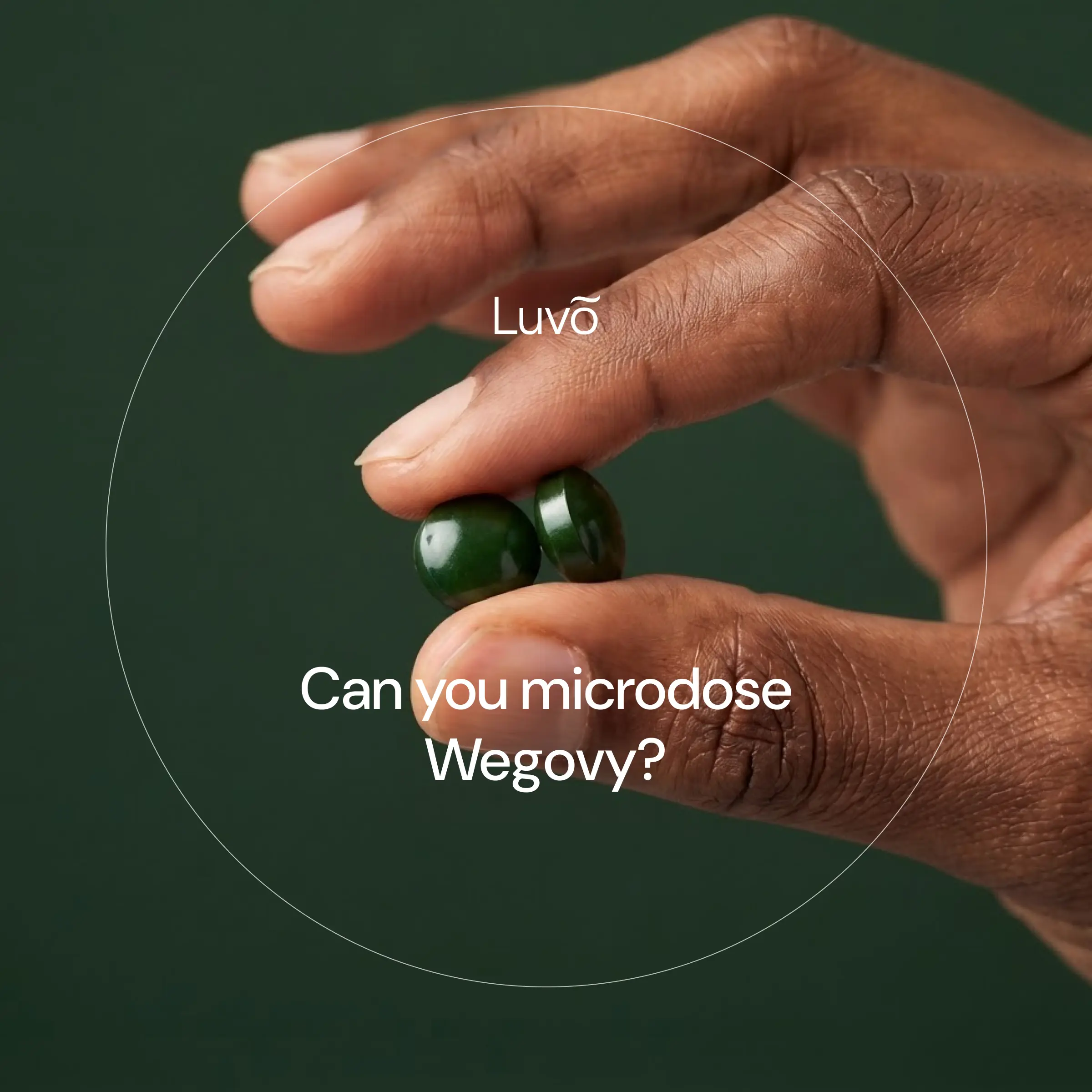
"Microdosing Wegovy" is a search people make when they are interested in taking a GLP-1 medication at a lower dose. The phrase raises a fair question: can you actually take Wegovy at a micro dose? The honest answer depends on what you mean, and on how Wegovy is made.
This article explains how Wegovy is dosed, what flexibility its label already allows, and where lower-dose approaches come from. It is educational and not medical advice. Any change to how you take a GLP-1 medication is a decision for a licensed provider.
Wegovy is a brand name for semaglutide, made by Novo Nordisk. Unlike Ozempic, which is approved for type 2 diabetes, Wegovy is FDA-approved for weight reduction and for lowering cardiovascular risk in certain adults [1]. So people searching for Wegovy microdosing are usually asking about the weight-management brand specifically.
In practice, "microdosing" tends to mean one of three things:
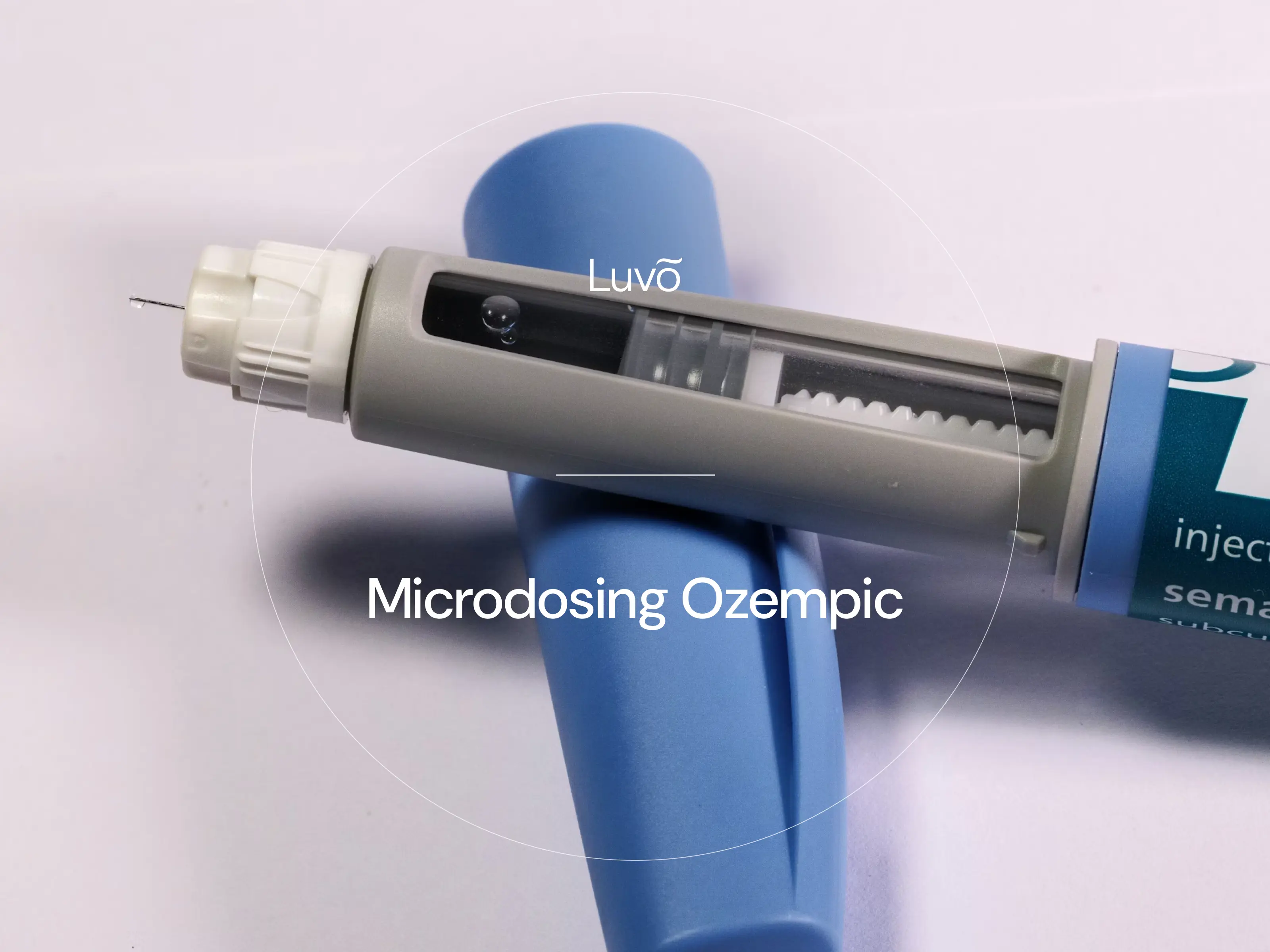
The first one has some room on the Wegovy label. The other two do not, as the next sections explain. If you came here from the Ozempic side of this question, our article on microdosing Ozempic covers that brand's dial pen, which works differently.
The Wegovy injection follows a fixed escalation schedule. It starts at 0.25 mg once weekly for four weeks, then steps up every four weeks to 0.5 mg, 1 mg, and 1.7 mg [1]. The recommended maintenance dose for weight reduction is 2.4 mg, with 1.7 mg as an approved alternative [1]. A higher 7.2 mg maintenance dose, sold as Wegovy HD, is also on the label for some adults [2].
Most Wegovy pens are single-dose autoinjectors [1, 2]. Each pen holds one fixed dose, delivers it all at once, and is then thrown away. There is no dial to turn and no way to set a smaller amount. That design is the main reason you cannot microdose a Wegovy pen.
There is also a Wegovy pill, a once-daily semaglutide tablet. It starts at 1.5 mg daily for 30 days [1, 2]. It then steps up every 30 days to 4 mg, 9 mg, and a 25 mg maintenance dose [1, 2]. Like the pens, the tablets come in fixed strengths, and splitting them is not part of their labeled use. So a "Wegovy microdose pill" is not something the brand offers.
Wegovy's label is not completely rigid. It includes a few provider-directed options for people who struggle with side effects [1, 2]:
The label also states that the gradual escalation exists to reduce the risk of digestive side effects [1]. That is the closest the label comes to the idea behind microdosing. It means going slower when your body needs it, with a provider making the call.
What the label does not include is a dose below 0.25 mg, or steps smaller than the pen strengths. Staying long term on an escalation dose that is not listed as a maintenance dose would also be outside the label's directions.
When people talk about truly lower doses or finer steps, they are usually talking about compounded semaglutide. A licensed compounding pharmacy prepares it to a prescription, rather than a manufacturer filling fixed-dose pens. That allows a provider to prescribe doses outside the brand's fixed strengths.
That flexibility comes with important limits. Compounded semaglutide is not Wegovy, and it is not a generic version of Wegovy. Wegovy's label, trial data, and FDA approvals do not apply to compounded semaglutide. Compounded medications are not FDA-approved, and the FDA does not evaluate them for safety, effectiveness, or quality [3]. The rules for compounded GLP-1 medications have also been changing, including a 2026 FDA proposal affecting large-scale compounding, so availability can shift [4]. A provider can explain current options. For more, see the important safety information for compounded semaglutide.
A lower-dose approach is sometimes discussed for people who are especially sensitive to digestive side effects, or who prefer to stay at a lower dose. It is also sometimes discussed by people moving down from a standard dose. For more background, see our complete guide to microdosing semaglutide.
It is not established as more effective or safer than standard dosing, and it may not be enough for everyone's goals. The safety screening is the same as for any semaglutide treatment. That includes a personal or family history of medullary thyroid carcinoma or MEN 2, a history of pancreatitis, and pregnancy or breastfeeding [1]. Like any prescription medication, semaglutide carries risks and possible side effects your provider will review with you.
If a lower-dose approach interests you, these questions can make the conversation more useful:
There is a real difference between a provider-managed lower dose and adjusting your own. Self-directed changes skip the review that catches problems: other medications, health conditions, and side effects that need attention.
Measuring your own dose also carries a specific risk. The FDA has received reports of people, some hospitalized, who measured and took incorrect doses of semaglutide products [3]. If you want a different dose than the one you have, ask your provider. Do not try to engineer one yourself.
Can I split Wegovy pen doses myself?
No. Most Wegovy pens are single-dose autoinjectors that deliver a fixed amount and cannot be adjusted [1, 2]. Trying to get a partial dose from one is not how the product is designed or approved. Talk to your provider instead.
Is microdosing Wegovy cheaper?
Not with the brand. Through Novo Nordisk's self-pay pharmacy, the standard pen doses from 0.25 mg to 2.4 mg cost the same per month [5]. That flat price applies after a short introductory offer [5]. A lower brand dose does not lower the price.
Is the lowest Wegovy dose a microdose?
Not really. The 0.25 mg dose is the label's starting dose, used for four weeks to help your body adjust before stepping up [1]. It is the first rung of the escalation schedule, not a separate low-dose treatment.
Does a lower dose mean fewer side effects?
The label uses gradual escalation specifically to reduce the risk of digestive side effects [1]. That supports going slowly at the start. It does not prove that staying on a lower dose long term produces fewer side effects. It also does not mean a lower dose gives the same results. Individual responses vary, and your provider can speak to your situation.
If any of this sounds like what you are dealing with, the next step is a conversation with a licensed provider who can review your history and decide whether treatment makes sense for you. Nothing is prescribed or shipped without that review.
Explore Luvo's Microdosing Program.
This article is for general educational purposes and is not medical advice. It is not a substitute for a conversation with a licensed healthcare provider about your own health. Prescription treatments require provider review and approval. Individual results vary.
Compounded medications are prepared by a licensed compounding pharmacy and are not FDA-approved. The FDA does not evaluate compounded drugs for safety, effectiveness, or quality.
Wegovy and Ozempic are the trademarks of their respective owner. Luvo Health is not affiliated with, endorsed by, or sponsored by Novo Nordisk.




.webp)