June 29, 2026
⋅
2
min read


Tirzepatide is a newer medication in the GLP-1 category. What sets it apart is that it acts on two receptors rather than one. Luvo's Microdosing Program uses a lower-dose, clinician-guided approach and offers it as an injection.
This is an educational overview. It isn't medical advice or a promise of a specific result.
Tirzepatide is a dual GIP/GLP-1 receptor agonist. GLP-1 receptor activation reduces appetite, slows gastric emptying, and supports insulin signaling. GIP (glucose-dependent insulinotropic polypeptide) activation adds effects on metabolism and insulin signaling. Acting on both pathways is what distinguishes tirzepatide from single-receptor medications such as semaglutide. Describing this mechanism is education, not a claim about results.
As with other GLP-1 medications, standard tirzepatide protocols titrate toward a maximum dose. A microdosing approach works with a lower dose and adjusts based on individual response, under provider supervision, rather than following a fixed schedule to the top of the range. Whether a lower dose is appropriate is a clinical decision.
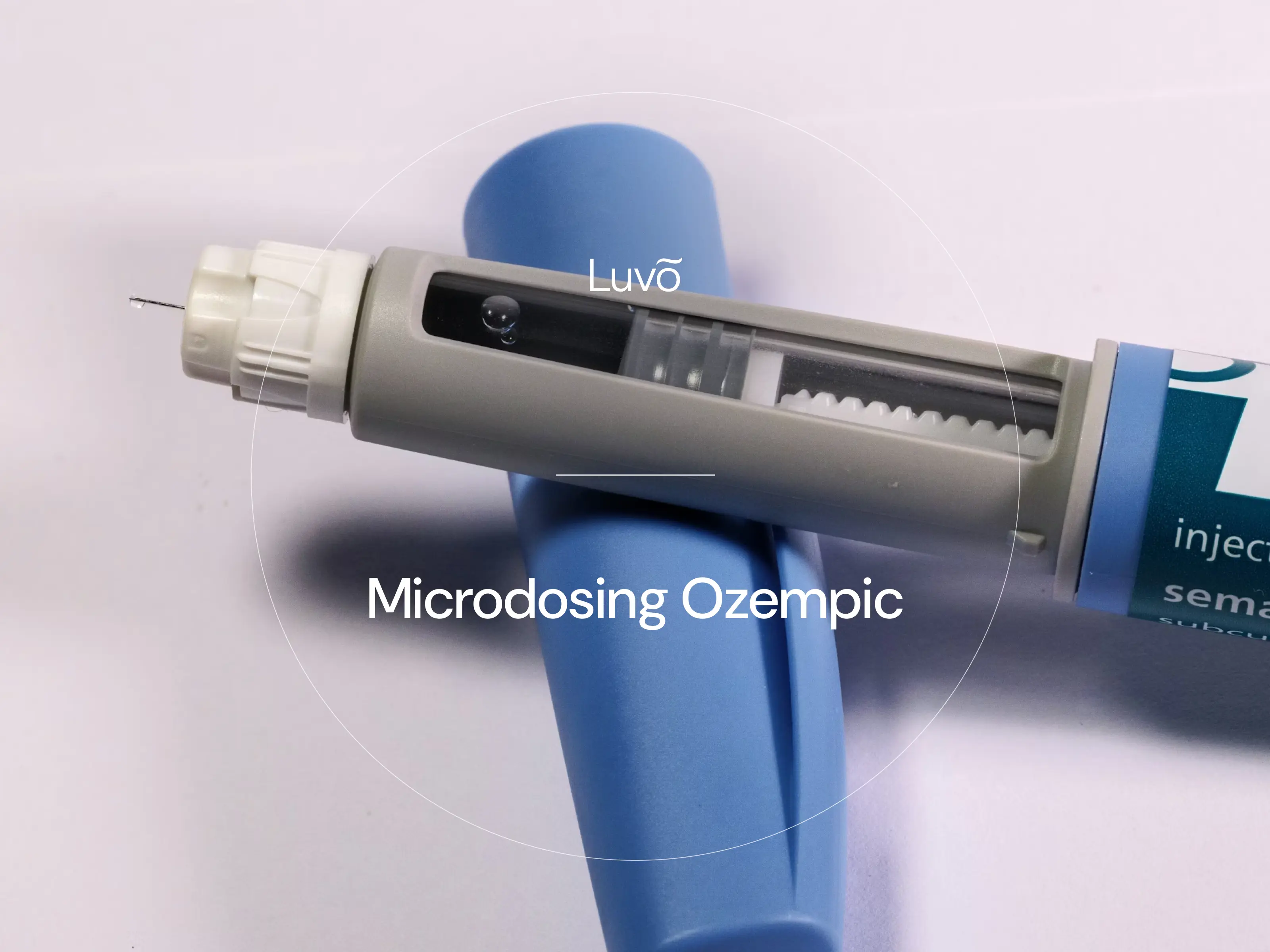
Luvo offers Microdosing Tirzepatide as an injection, given weekly under the skin. If you draw your dose from a vial, measuring it correctly matters, and the side effects to expect are worth reading before you start. Tirzepatide is a prescription medication with important contraindications: it isn't appropriate for people with a personal or family history of medullary thyroid carcinoma or Multiple Endocrine Neoplasia syndrome type 2, and a provider screens for these and other factors. The compounded formulation a provider may prescribe is not FDA-approved, and a licensed provider reviews your health history before prescribing.
If tirzepatide is on your radar, the next step is a conversation with a licensed provider who can review your health history and decide whether it, and what dose, fit you. Nothing is prescribed or shipped without that review.
Explore Luvo's Microdosing Tirzepatide injection options, or visit the Microdosing Program.
This article is for educational purposes only and is not medical advice. Compounded medications are not FDA-approved. Always consult a licensed healthcare provider to determine whether any treatment is appropriate for you.




.webp)