Introduction: Rethinking How We Use GLP-1 Medications
If you've been following the weight-loss conversation over the past few years, you've almost certainly heard of GLP-1 receptor agonists — medications like semaglutide (the active ingredient in Ozempic and Wegovy) and tirzepatide (the active ingredient in Mounjaro and Zepbound). These medications have transformed the obesity treatment landscape, helping millions of people achieve clinically significant weight loss.
But here's what most people don't know: you don't always need the highest dose to get meaningful results. That's the core idea behind microdosing GLP-1 medications — and it's an approach that's gaining serious traction among forward-thinking clinicians and patients alike.
What Does "Microdosing" Mean in This Context?
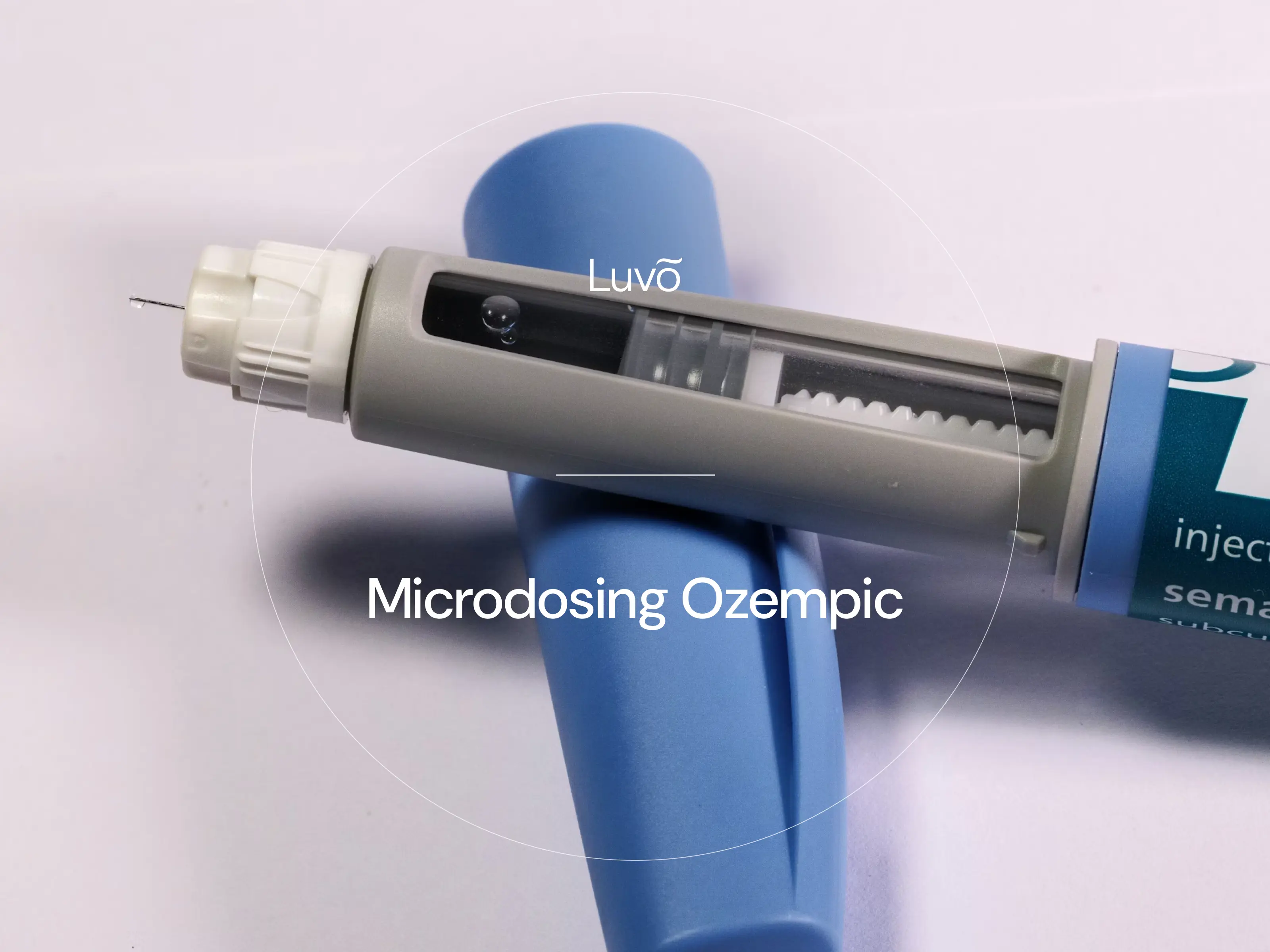
Microdosing GLP-1 medications refers to using lower-than-standard doses of semaglutide or tirzepatide to achieve weight-loss benefits while minimizing the side effects that often come with higher doses. Unlike microdosing in other contexts (such as psychedelics), this isn't about sub-therapeutic amounts. Instead, it's about finding the optimal effective dose — the smallest amount that delivers real results for your body.
The standard approach to GLP-1 therapy involves a titration schedule that ramps patients up to the maximum tolerated dose over several months. Microdosing takes a different philosophy: start low, go slow, and stay at the dose that works — even if that dose is lower than the traditional target.
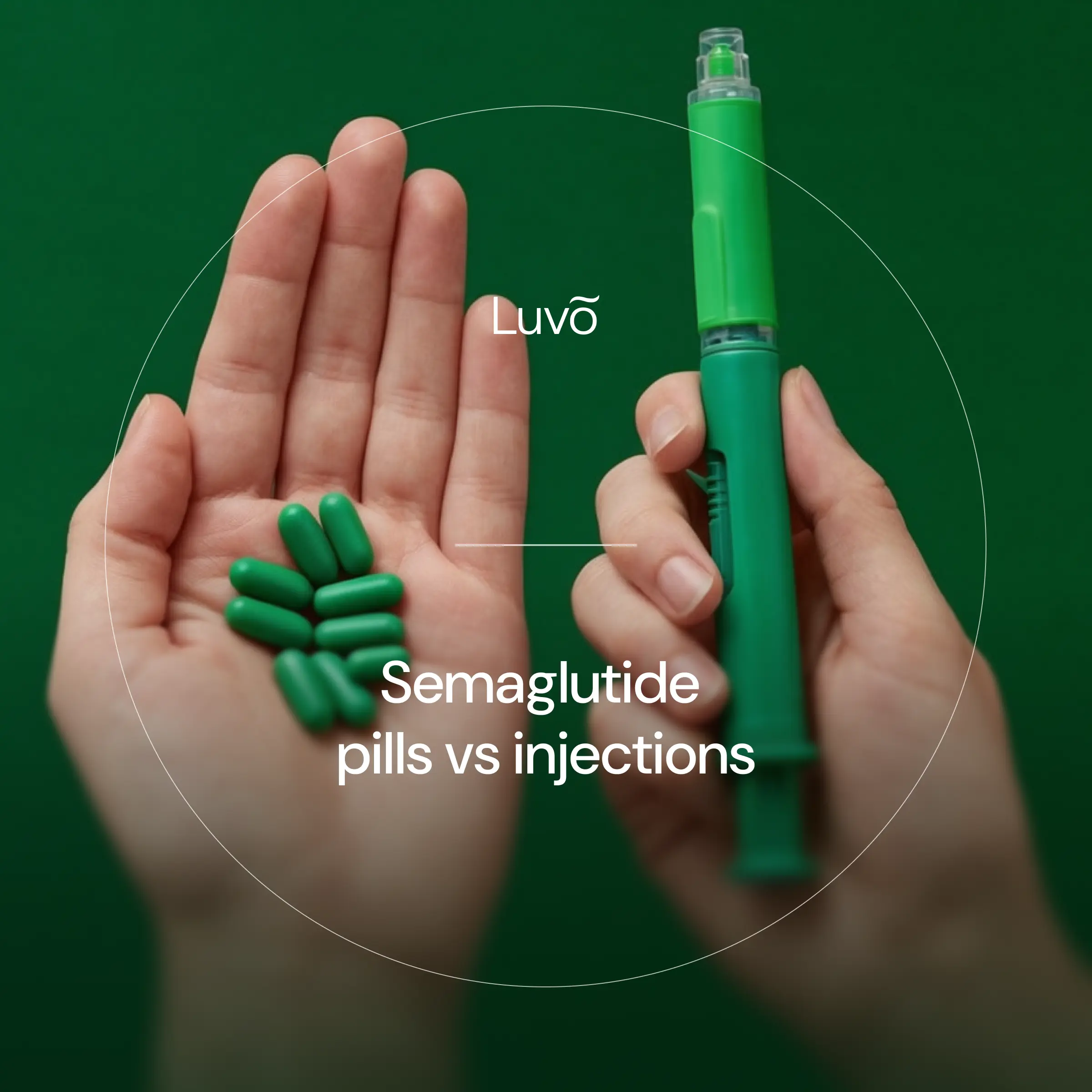
At Luvo, our microdosing program offers both injection and tablet formulations of semaglutide and tirzepatide, giving patients flexibility and choice in how they receive treatment.
How Microdosing Differs from Standard GLP-1 Therapy
In conventional GLP-1 therapy, the goal is typically to reach the maximum approved dose. For semaglutide, that means titrating from 0.25 mg up to 2.4 mg weekly. For tirzepatide, the range goes from 2.5 mg to 15 mg weekly.
Microdosing challenges this "more is better" assumption. Research and clinical experience have shown that many patients achieve significant appetite reduction, improved metabolic markers, and meaningful weight loss at doses well below the maximum. The key differences include:
Dose philosophy — Standard therapy aims for maximum dose; microdosing aims for minimum effective dose.
Side effect profile — Higher doses are associated with more frequent and severe gastrointestinal side effects including nausea, vomiting, and diarrhea. Microdosing significantly reduces these.
Sustainability — Patients on lower doses often report better quality of life and higher long-term adherence because they aren't battling constant side effects.
Cost considerations — Lower doses can mean lower medication costs, making treatment more accessible over time.
Why Luvo's Microdosing Program Stands Out
Most telehealth competitors focus on standard dosing protocols. They follow a one-size-fits-all titration schedule designed to get every patient to the highest tolerable dose.
Luvo's microdosing program is built on a fundamentally different philosophy. Our clinical team works with each patient to identify their personal optimal dose — the point where they're seeing real results without unnecessary side effects. We offer three distinct microdosing medication options: tirzepatide injection, semaglutide injection, and semaglutide tablets. This range of choices means patients can find not just the right medication, but the right delivery method for their lifestyle.
Our program also includes ongoing clinical support, regular check-ins, and dose adjustments based on your progress — not a rigid schedule.
Is Microdosing Right for You?
Microdosing GLP-1 medications may be a particularly good fit if you're interested in weight loss but concerned about side effects, if you've tried higher doses and experienced intolerable nausea or GI issues, if you're looking for a more gradual and sustainable approach, or if you want to maintain the benefits of GLP-1 therapy long-term without being on the maximum dose.
It's important to note that microdosing is still a medical treatment that requires clinical oversight. Luvo's program connects you with licensed providers who specialize in this approach and can guide your treatment safely.
The Bottom Line
Microdosing GLP-1 medications represents a paradigm shift in how we think about weight-loss pharmacotherapy. It's not about using less medication for the sake of it — it's about using the right amount for your body. With Luvo's microdosing program, you get the clinical expertise, medication options, and ongoing support to find that sweet spot.
Ready to explore whether microdosing is right for you? Visit our microdosing program page to learn more and get started.
.webp)