Ready to take the next step?
Find out which treatment fits your health best.
Get started
No commitment until clinician review
Cancel anytime






Paroxetine (non-hormonal) is a prescription option used to help manage moderate to severe vasomotor symptoms (VMS) associated with menopause, most commonly hot flashes and related nighttime symptoms. It’s an SSRI at a low, menopause-specific dose, and it is not estrogen.
Paroxetine as paroxetine mesylate equivalent to 7.5 mg paroxetine base in the FDA-approved low-dose menopause product.
Once daily at bedtime, with or without food. Take it consistently at the same time each night. If you miss a dose: take the next dose at the usual time, don’t double.
Side effects can happen, especially early on. Commonly reported categories include:
Paroxetine is a non-hormonal prescription medication used in menopause care to help reduce moderate to severe hot flashes (vasomotor symptoms). It belongs to a class called SSRIs and is offered at a low dose specifically studied for menopause-related symptoms.

Images are for illustrative purposes only. Individual results may vary. Compounded medications are not FDA-approved.
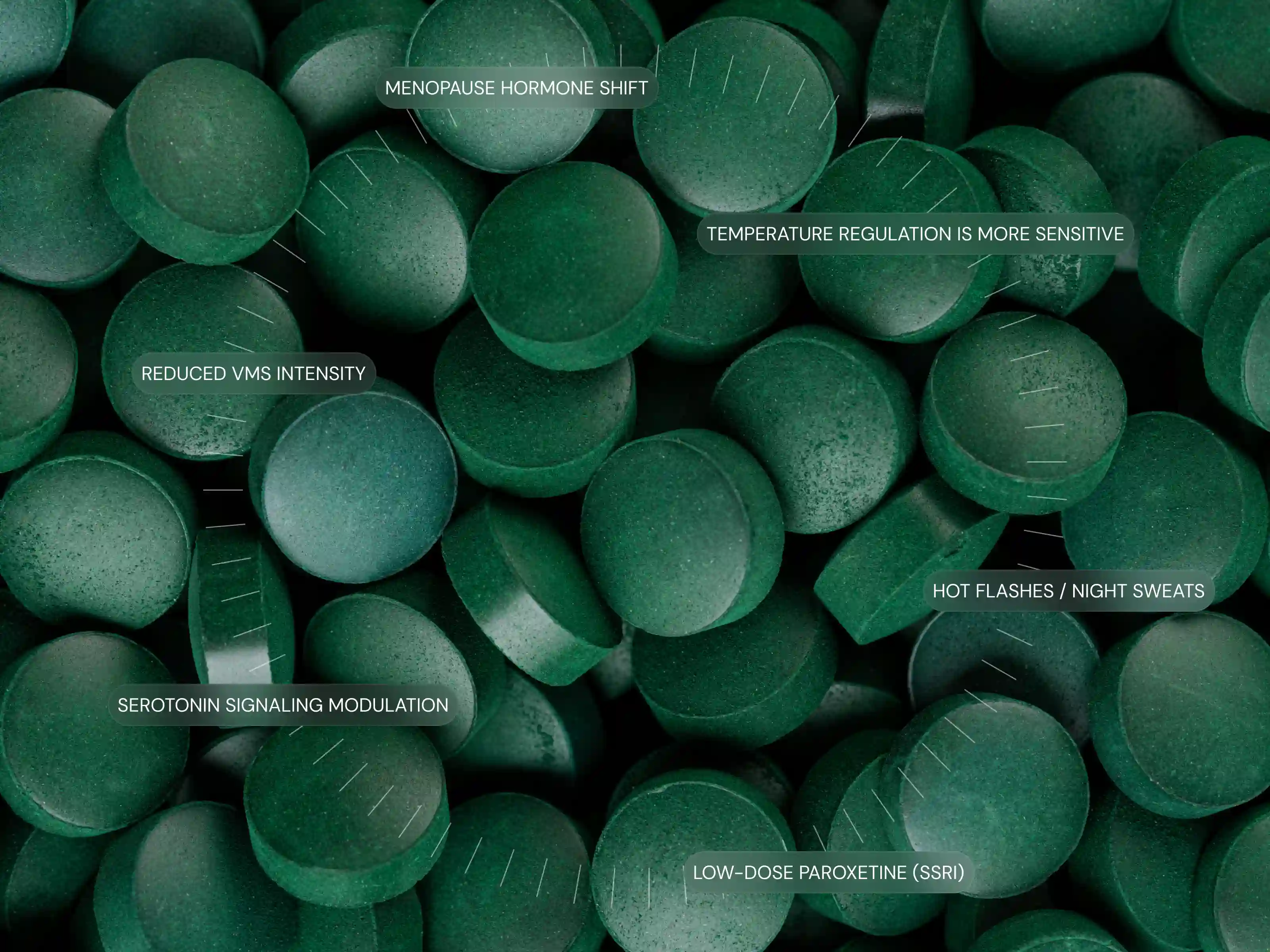
Paroxetine is an SSRI that affects serotonin signaling. For menopause-related vasomotor symptoms, the FDA label notes the exact mechanism is not fully known, but paroxetine’s SSRI activity is part of what’s believed to help regulate temperature-control pathways involved in hot flashes.
Images are for illustrative purposes only. Individual results may vary. Compounded medications are not FDA-approved.
Take one dose nightly as prescribed and track symptoms (hot flash frequency, sleep disruption, triggers) for the first few weeks. In a telehealth program, you’ll typically have check-ins to review benefit, side effects, and medication interactions—especially if you take migraine meds, antidepressants, sleep aids, NSAIDs, blood thinners, or tamoxifen. Avoid stopping suddenly without clinician guidance.

Images are for illustrative purposes only. Individual results may vary. Compounded medications are not FDA-approved.



Paroxetine is a prescription medication in the SSRI category. In menopause care, it’s sometimes used as a non-hormonal option to help reduce hot flashes and support mood-related symptoms.
No. Paroxetine is not estrogen or progesterone and doesn’t replace hormones. It works by influencing serotonin signaling, which can affect temperature regulation and mood.
Paroxetine is most commonly considered for hot flashes and night sweats. Depending on your symptom profile, it may also help with mood swings, irritability, and anxiety.
Some people notice improvement within 1–2 weeks, with steadier results over 4–8 weeks. Your clinician will typically reassess and adjust based on symptom relief and side effects.
Take it exactly as prescribed, usually once daily. Consistency matters—taking it at the same time each day can help reduce side effects and keep symptom control steady.
Common side effects can include nausea, dry mouth, headache, drowsiness or insomnia, constipation, sweating, and changes in appetite. Many side effects lessen as your body adjusts, but let your clinician know if they persist.
Yes. Some people feel sleepier, while others feel more awake. If sleep changes show up, your clinician may recommend adjusting the timing of your dose or exploring another option.
Weight changes can happen for some people on SSRIs, but it varies widely. If you notice appetite or weight changes, your clinician can help you manage them or consider alternatives that fit you better.
In many cases, yes—paroxetine may be used alongside HRT or as a standalone option when hormones aren’t preferred. Your clinician will review your meds and history to confirm what’s appropriate.
Yes. Paroxetine can interact with certain medications, including some antidepressants, migraine medicines, blood thinners, and other drugs that affect serotonin. Always share your complete medication and supplement list with your clinician and pharmacist.
Follow your prescription instructions. In general, take it when you remember unless it’s close to your next dose—then skip and continue as scheduled. Don’t double up unless your clinician tells you to.
It’s best not to stop suddenly. Some people experience discontinuation symptoms if they stop abruptly. If you want to stop or switch, your clinician can guide a gradual taper for a smoother transition.







.webp)


.webp)