June 18, 2026
⋅
2
min read


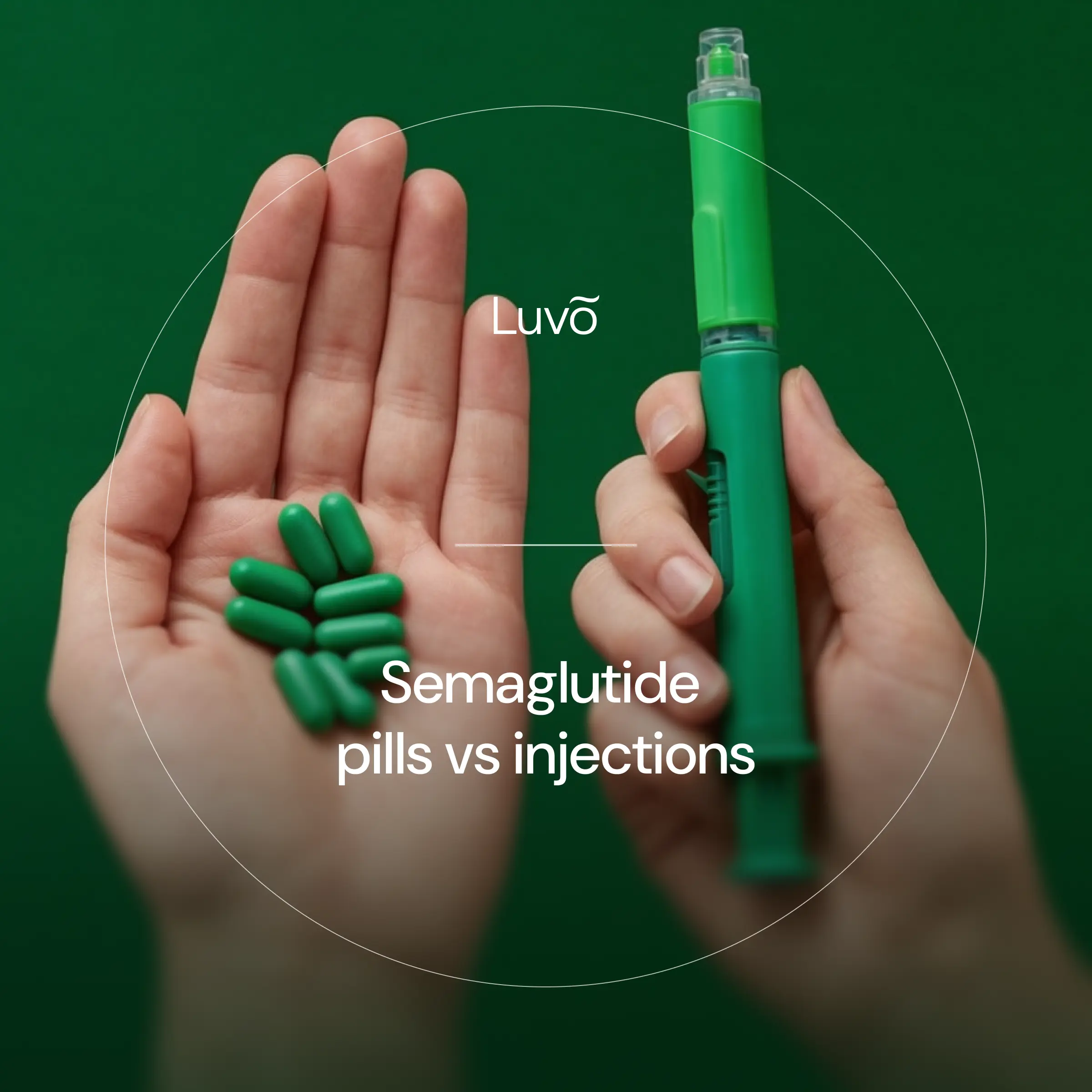
With GLP-1 medications, the conversation usually centers on which medication to take. An equally practical question is how you take it. Luvo's Microdosing Program offers semaglutide in both injectable and oral tablet form; tirzepatide is currently offered as an injection only. This article is an educational overview of how injectable and oral delivery differ in general, and applies specifically to semaglutide's two formats. It isn't medical advice or a promise of a specific result.
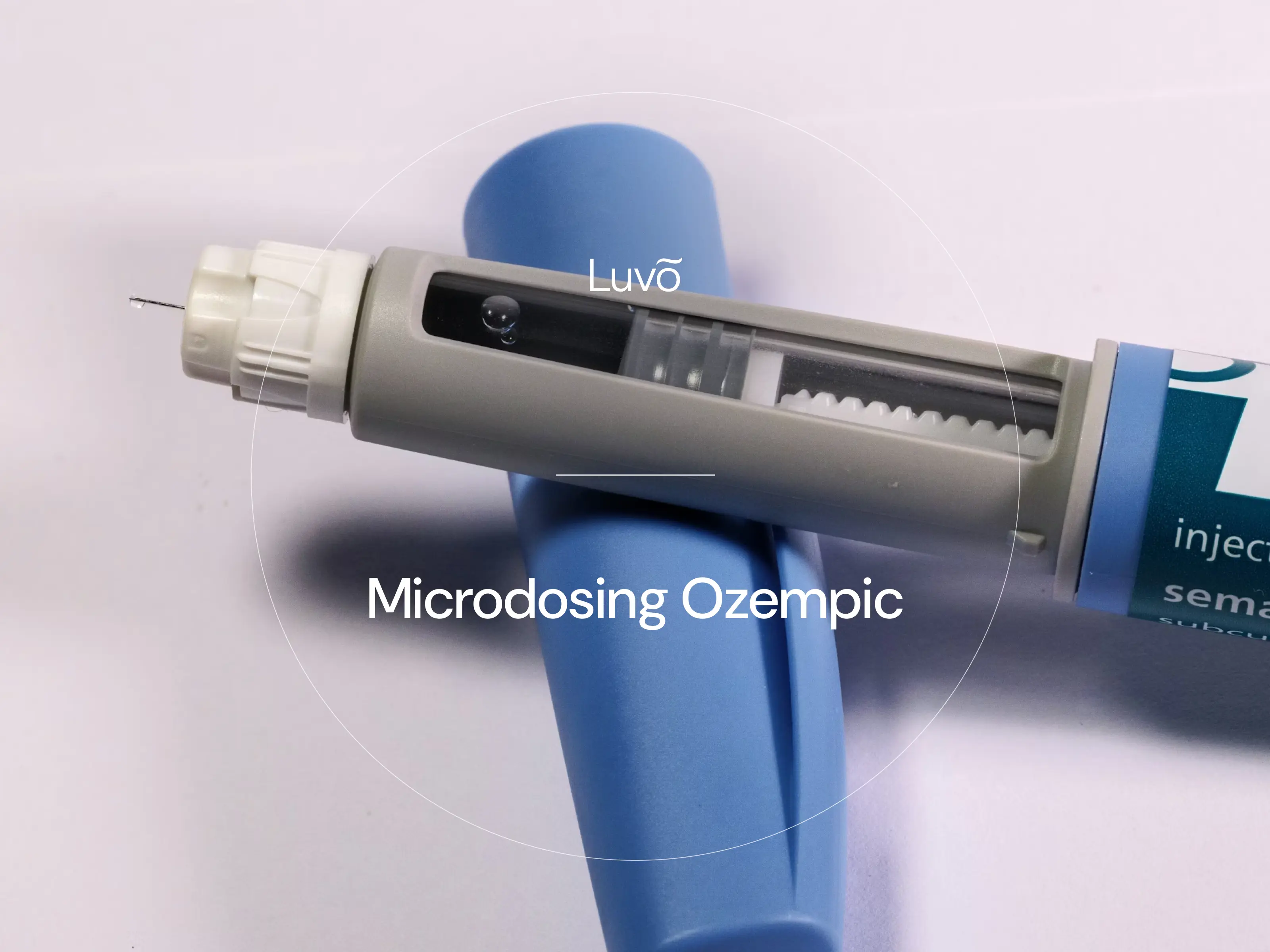
Injectable GLP-1 medications are given under the skin (subcutaneously), typically once weekly using a small needle. For most people the injection takes only seconds. Injectable delivery provides consistent absorption and isn't affected by food timing.
Oral GLP-1 tablets use formulation technology to help the active ingredient survive the stomach and absorb through the GI tract. They come with specific instructions: taken on an empty stomach with a small amount of water, followed by a wait before eating, drinking, or taking other medications. Following this routine matters for absorption.
Injectable formulations generally have higher bioavailability (the share of medication that reaches the bloodstream) than oral formulations, which is why oral and injectable doses are measured differently. In a microdosing program, a provider prescribes the appropriate dose for whichever method you use, so this difference is accounted for in the dosing. If you draw an injection from a vial, how the measurements relate to each other is worth understanding.
For semaglutide, the best delivery method is the one you'll use consistently. Injections may suit people who prefer a once-weekly routine with no food-timing steps; tablets may suit people who prefer to avoid needles and can keep to the fasting-window routine. Switching between semaglutide formats is possible if your needs change, and a licensed provider can help you decide. Choosing between semaglutide and tirzepatide is a separate question from choosing a format.
If you are weighing a format, the next step is a conversation with a licensed provider who can review your history and routine and decide which method and dose fit you. Nothing is prescribed or shipped without that review, and the compounded medications used in the program are not FDA-approved.
Explore Luvo's Microdosing Program.
This article is for educational purposes only and is not medical advice. Compounded medications are not FDA-approved. Always consult a licensed healthcare provider to determine whether any treatment is appropriate for you.




.webp)