September 1, 2026
⋅
2
min read


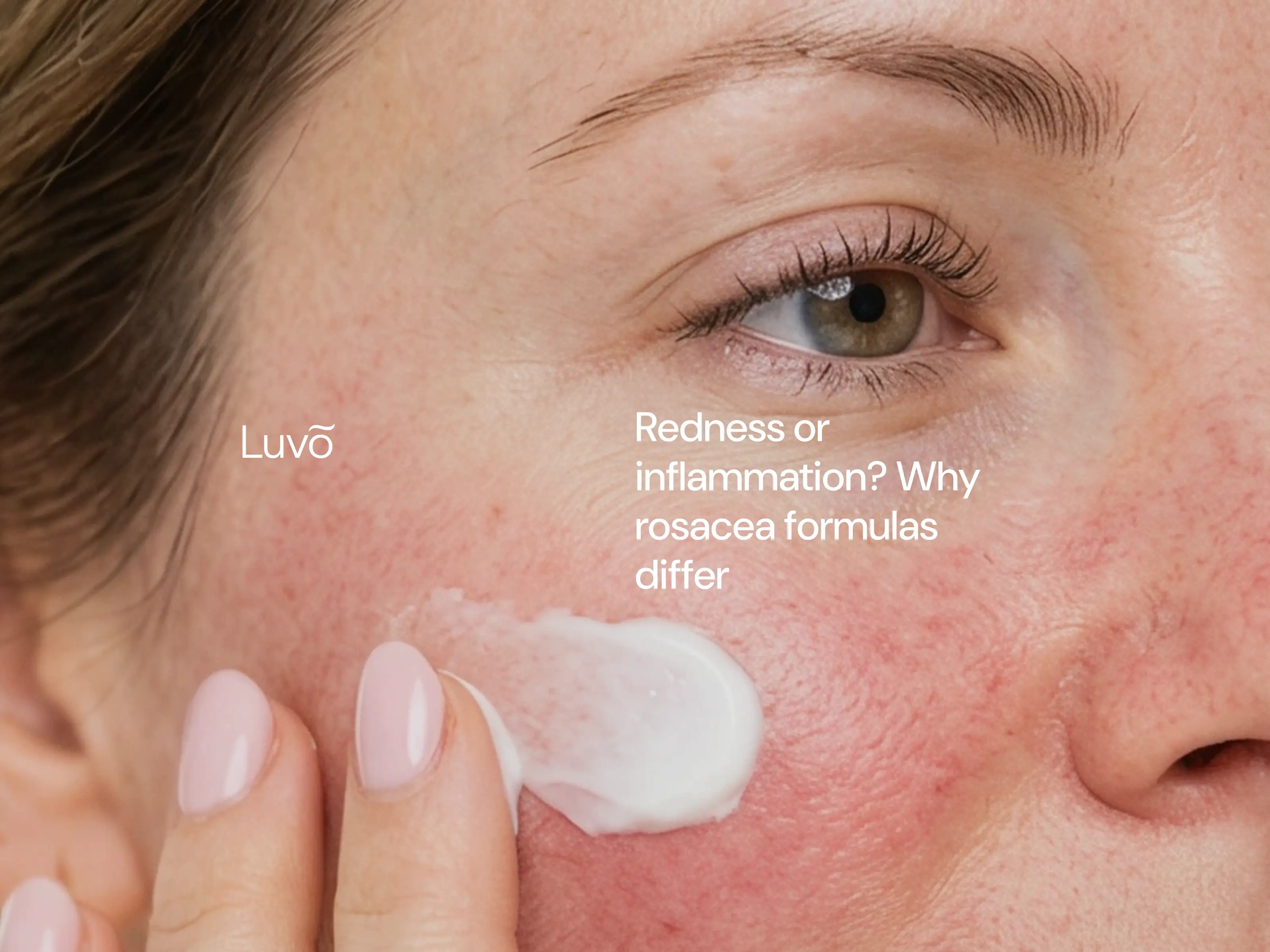
Rosacea often gets described as "facial redness," but it shows up in more than one way. Some people mainly get inflamed, acne-like bumps and pustules. Others mainly get persistent redness, flushing, and visible blood vessels. Many people get a mix, with one pattern leading. That is why Luvo's Skincare Program offers two different rosacea formulas rather than one.
This article helps you understand how the two formulas differ. It is educational content, not medical advice, and not a diagnosis.
Two patterns come up most often, and they can overlap. The inflammatory pattern brings papules and pustules, small inflamed bumps that can look like acne but come from a different process. The vascular pattern brings persistent redness, warmth or flushing, and visible small vessels. Working out which pattern is driving your skin is what points toward the right approach, and that is a call a licensed provider makes.
This formula combines three actives that each have a long history in rosacea care. Azelaic acid calms inflammation and helps normalize skin cell turnover. Metronidazole is an anti-inflammatory topical long used for rosacea. Ivermectin lowers inflammation and reduces the population of Demodex mites, which are linked to inflammatory rosacea flares. Each of these is FDA-approved on its own for rosacea.
Combined into one compounded formula, they are not FDA-approved as a combination. The FDA does not evaluate compounded formulas for safety, effectiveness, or quality. This build tends to fit skin where inflamed bumps and pustules are the main problem and the skin tolerates stronger actives.
This formula keeps metronidazole and ivermectin for their anti-inflammatory and anti-mite actions, but replaces azelaic acid with niacinamide. Azelaic acid works well, though it is also a common cause of stinging in reactive skin. Niacinamide is gentler: it supports the skin barrier and helps calm irritation. That swap makes this the milder option.
Like the other formula, this one is compounded and not FDA-approved as a combination. It tends to fit skin that stings, burns, or flares easily, or where a weakened barrier makes stronger actives hard to tolerate.
Both formulas work on the inflammatory side of rosacea, so the real difference is intensity versus tolerability. The inflammation formula is the fuller-strength option. The sensitive-skin formula trades some of that strength for gentleness, which matters a lot if your skin reacts to almost everything. The deciding factors are how active the inflammation is and how well your skin handles topical actives. That is why the choice belongs with a provider, not a self-assessment.
One thing neither formula targets directly is the vascular side: persistent redness and visible vessels. Anti-inflammatory actives can calm the inflamed component, but dilated vessels work through a different mechanism. If steady redness and flushing are your main concern, raise that at your review so a provider can talk through the right approach.
These are prescription formulas. Like any prescription treatment, they can cause side effects, and topical rosacea actives commonly cause some dryness or stinging early on. A licensed provider reviews your history before anything is prescribed.
How do I know which formula fits me?
As a rough guide, inflamed bumps and pustules in skin that tolerates actives point toward the inflammation formula, while easily irritated or reactive skin points toward the sensitive-skin one. A licensed provider makes the actual call.
What if my skin stings or reacts?
Tell your provider. The sensitive-skin formula exists for exactly this, and a provider can adjust your plan. Do not push through worsening irritation on your own.
My main issue is redness and visible vessels, not bumps. What then?
That points to the vascular pattern, which these anti-inflammatory formulas do not target directly. Bring it up at your review so a provider can discuss options that fit.
How quickly does treatment work?
It varies, and topical rosacea treatment is usually gradual, often over several weeks. A provider can set realistic expectations for your skin.
If any of this sounds like what you are dealing with, the next step is a conversation with a licensed provider who can review your history and work out whether inflammation or sensitivity is driving your skin. They can then decide whether a formula makes sense for you. Nothing is prescribed or shipped without that review.
Explore Luvo's Skincare Program.
This article is for general educational purposes and is not medical advice. It is not a substitute for a conversation with a licensed healthcare provider about your own health. Prescription treatments require provider review and approval. Individual results vary.
Compounded medications are prepared by a licensed compounding pharmacy and are not FDA-approved. The FDA does not evaluate compounded drugs for safety, effectiveness, or quality. Combination formulations are not approved as combinations.