August 20, 2026
⋅
2
min read


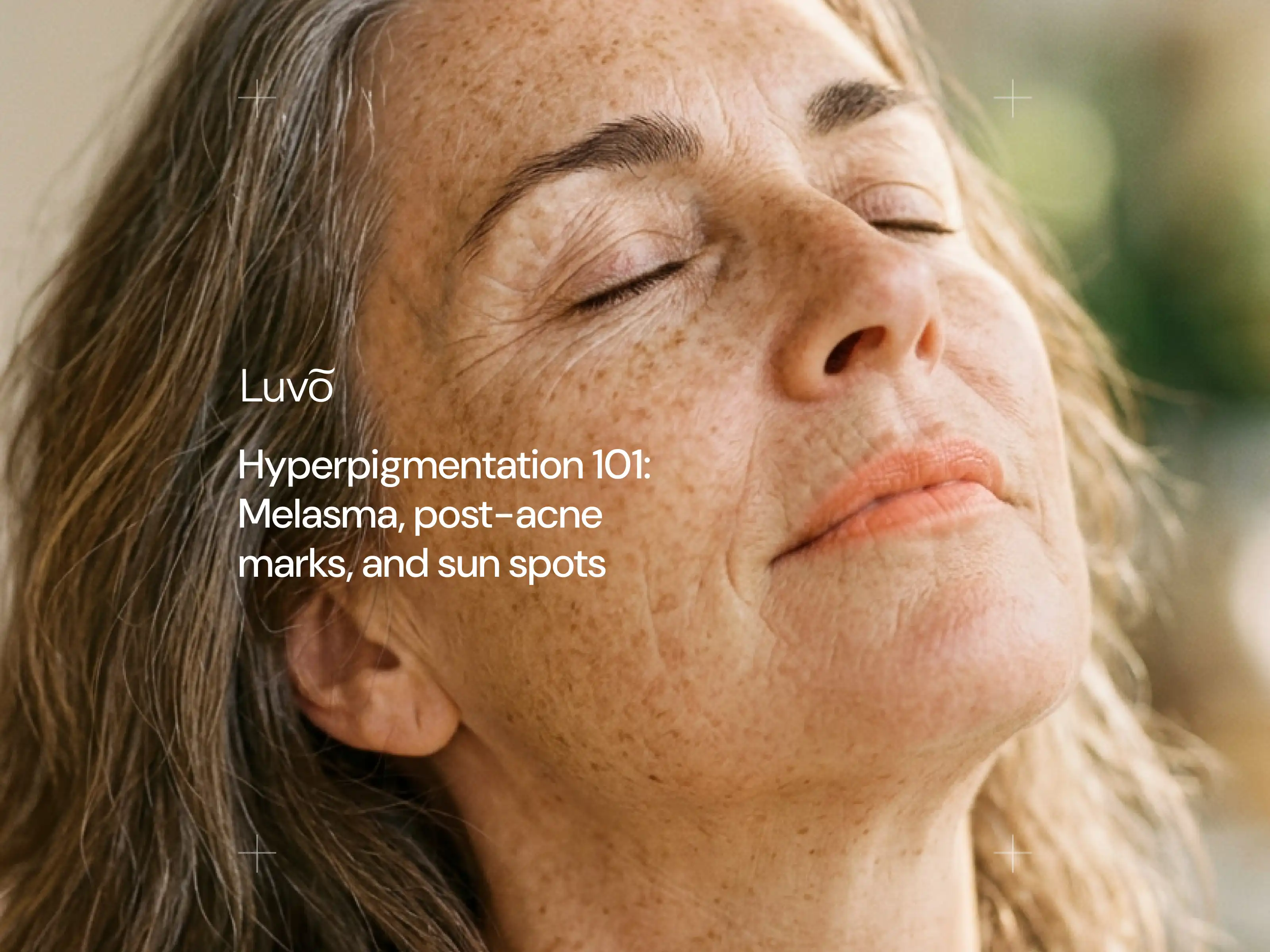
Dark spots on the face are often lumped together under one word, pigmentation, but behind that word are a few distinct skin states with different causes and different behavior over time. Effective facial pigmentation treatment depends on which type you actually have.
This article helps orient you. It is educational content, not medical advice, and not a diagnosis.
Melasma shows up as symmetrical patches, often on the cheeks, forehead, and above the upper lip. It is tightly linked to hormonal changes (pregnancy, hormonal contraception) and sun exposure, and it tends to recur when the trigger becomes active again. Melasma often needs a long-term, sequential approach and consistent sun protection rather than a one-time course.
These are spots that form after skin recovers from inflammation, most often after acne, injury, or other irritation. Unlike melasma, they are not symmetrical; they sit right where the inflammation was. Over time they can fade on their own, but that takes months, and active treatment can speed up the process.
These spots are linked to sun exposure accumulated over the years, most often on the areas that get the most sun. They tend to have clearer edges than melasma and are less connected to the menstrual cycle.
Formulas for evening out tone are matched to their composition and aimed at different needs: one leans toward more active brightening with hydroquinone, another toward a gentler, gradual approach with tranexamic acid, and a third targets several mechanisms at once. A formula that works well for post-acne marks is not always the best choice for melasma, and vice versa. These are compounded prescription formulas, which are not FDA-approved as combinations and are not evaluated by the FDA for safety, effectiveness, or quality, so which one fits is a provider's decision rather than a self-diagnosis.
Sun protection matters for any type of pigmentation, whichever formula you use. Without it, the result of any approach is limited, and melasma in particular tends to relapse under UV exposure.
Since melasma, post-acne marks, and sun spots behave differently, the useful next step is working out which type you are dealing with, and that is a conversation to have with a licensed provider rather than a guess. These are prescription formulas: you can note what your pigmentation looks like in the short intake, but a licensed provider reviews it and approves or adjusts the formula before anything is prescribed or shipped. Whatever the plan, consistent sun protection is part of it.
Explore Luvo's Skincare Program.
This article is for educational purposes only and is not medical advice. Luvo's pigmentation formulas are compounded, and compounded medications are not FDA-approved and are not evaluated by the FDA for safety, effectiveness, or quality. Always consult a licensed healthcare provider to determine which approach fits you.