September 29, 2026
⋅
3
min read



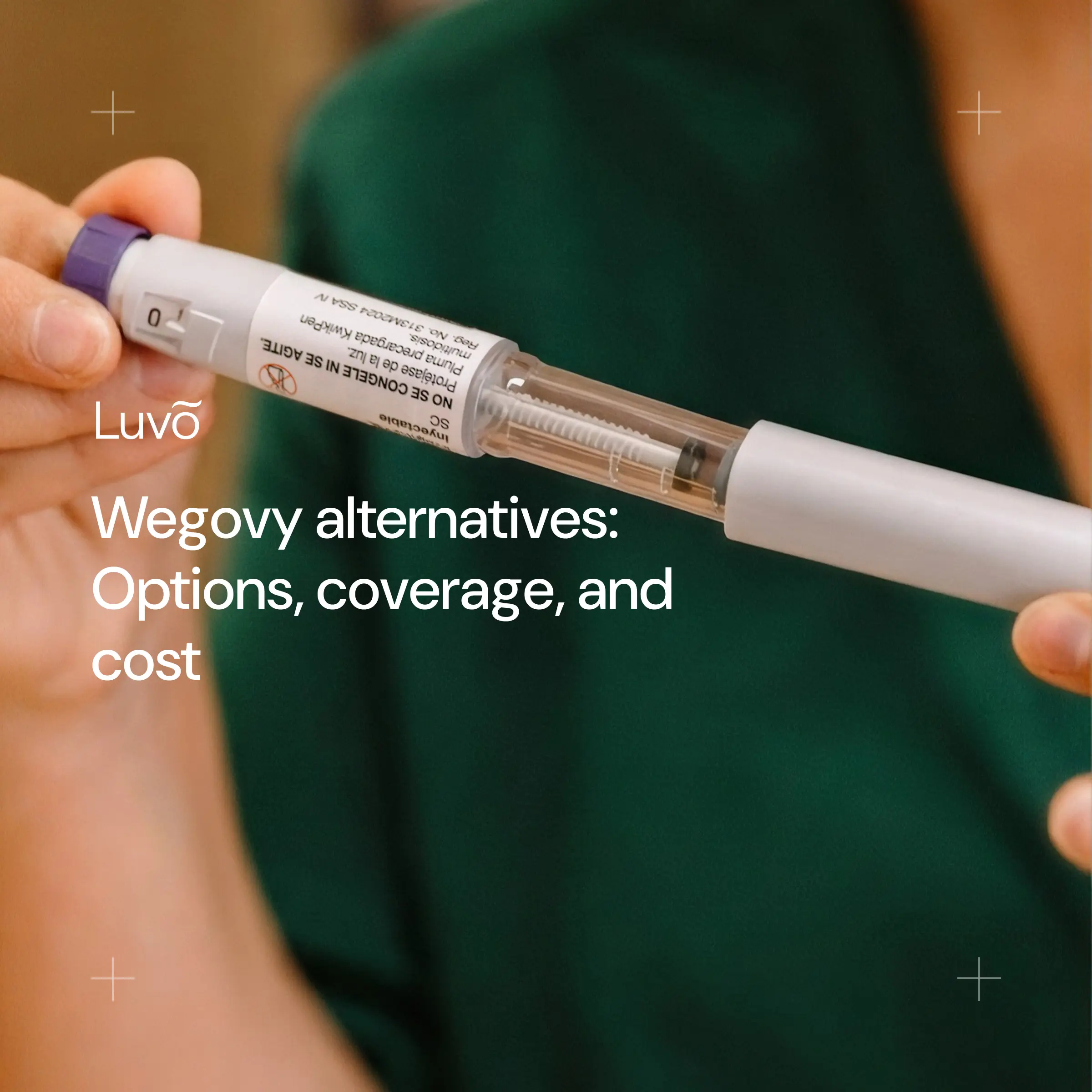
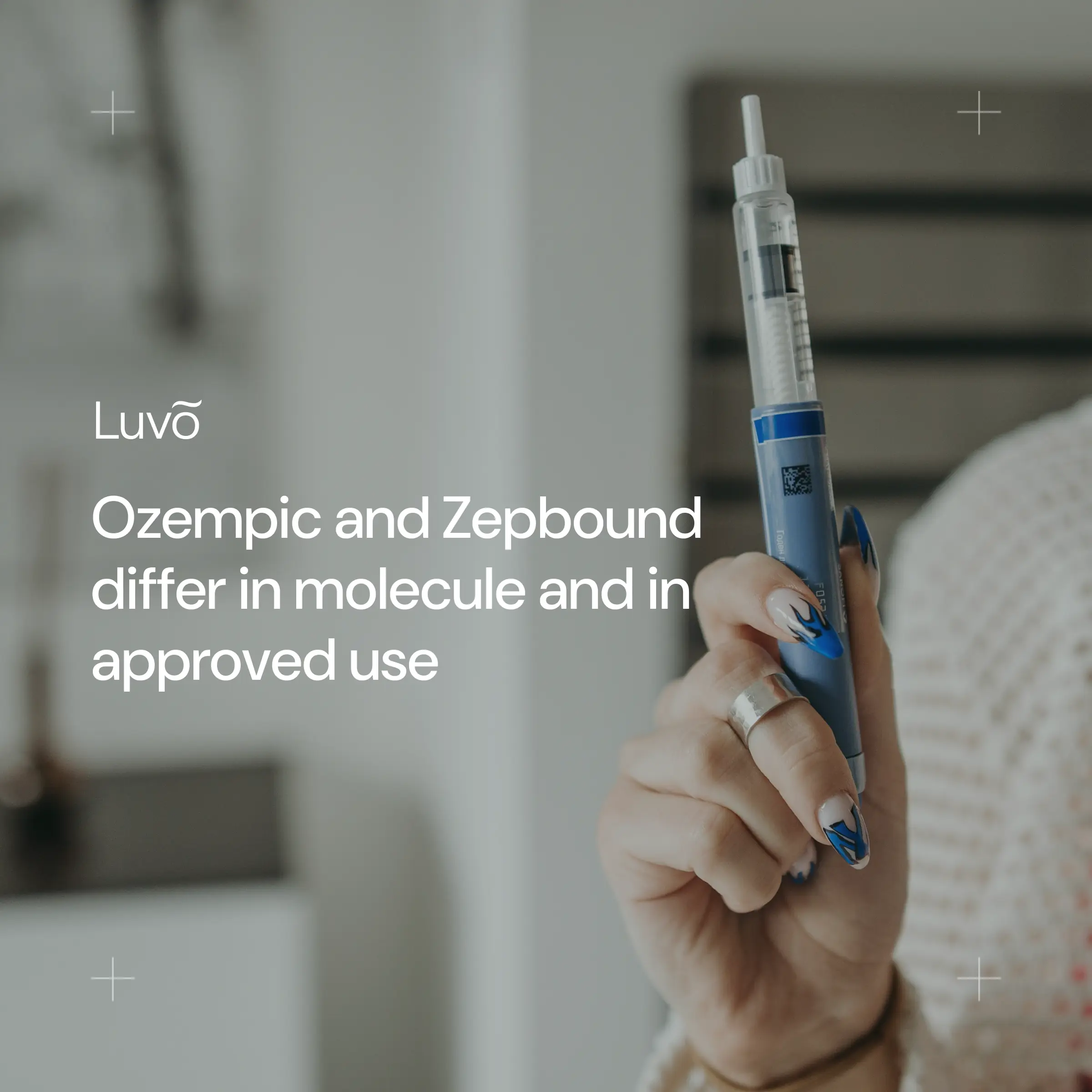
Wegovy and Zepbound are the two injectable medications approved in the US specifically for chronic weight management. They are often discussed as if they were versions of the same thing. They are not. They contain different molecules that work on different receptors, and as of 2025 there is a trial that put them directly against each other.
This article covers what is in each, what the head-to-head data showed, how they differ on labeling, side effects, and cost, and how a provider decides. It is educational and not medical advice.
Wegovy contains semaglutide. Semaglutide is a GLP-1 receptor agonist. It mimics a gut hormone released after eating, acting on receptors in the brain that govern hunger and fullness, and slowing how quickly the stomach empties.
Zepbound contains tirzepatide. Tirzepatide acts on two receptors: GLP-1 and GIP. GIP is a second gut hormone, and the working hypothesis is that adding GIP activity changes the effect in ways single-receptor agonism does not reach. The trial investigators noted that GIP receptors in the brain are not distributed identically to GLP-1 receptors, and that this difference may contribute to what has been observed with dual agonism [1].
Both are once-weekly subcutaneous injections. That is roughly where the similarity ends.
Until 2025, comparisons between these two rested on separate trials with different participants, which is a weak basis for any conclusion. SURMOUNT-5 changed that.
The trial randomized 751 adults with obesity, or overweight with a weight-related condition, and without diabetes, to the maximum tolerated dose of tirzepatide (10 mg or 15 mg) or the maximum tolerated dose of semaglutide (1.7 mg or 2.4 mg), once weekly for 72 weeks [1].
At week 72, least-squares mean body weight change was −20.2% with tirzepatide and −13.7% with semaglutide [1]. Waist circumference fell 18.4 cm and 13.0 cm respectively [1]. Participants on tirzepatide were more likely to reach reductions of at least 10%, 15%, 20%, and 25% [1]. The investigators concluded that tirzepatide was superior to semaglutide on body weight and waist circumference at week 72 [1].
Three things to hold alongside that result.
It was open-label. Participants and investigators knew which drug they were receiving, which is a recognized limitation in a weight trial.
Averages are not predictions. A mean of 20.2% describes a distribution. Individual results vary widely, and this trial found weight loss roughly 6% lower in men than women in both groups [2].
It measured weight, not everything. Which brings us to the next section.
Both are approved for chronic weight management in adults with obesity, or overweight with at least one weight-related condition, alongside diet and physical activity.
Beyond that they diverge.
Cardiovascular outcomes. Semaglutide has completed cardiovascular outcomes data. The SELECT trial found a reduction in major adverse cardiovascular events in people with overweight or obesity and established cardiovascular disease [3], and that indication is reflected in labeling. Tirzepatide's equivalent outcomes trial was still running at the time of SURMOUNT-5's publication. If cardiovascular risk is the dominant concern, that difference may matter more than six percentage points of weight.
Sleep apnea. Tirzepatide carries an approval for moderate to severe obstructive sleep apnea in adults with obesity. Semaglutide does not.
Related products. Each molecule also appears in a diabetes-indicated product under a different brand name, at different dosing. Those are separate products and should not be treated as interchangeable with the weight management versions.
In SURMOUNT-5, the most common adverse events in both groups were gastrointestinal, mostly mild to moderate, and clustered during dose escalation [1].
The pattern differed in one measurable way. Gastrointestinal adverse events leading to treatment discontinuation occurred in 5.6% of the semaglutide group and 2.7% of the tirzepatide group [2].
Both medications share the class considerations: nausea, diarrhea, constipation, vomiting, and less commonly pancreatitis, gallbladder problems, and serious hypersensitivity reactions. Both carry a boxed warning regarding thyroid C-cell tumors based on rodent studies, with a contraindication in people with a personal or family history of medullary thyroid carcinoma or MEN 2. Both can cause dehydration severe enough to affect the kidneys when gastrointestinal symptoms go unmanaged.
These are prescription medications with real risks. A provider will go through the full picture against your history before anything is prescribed.
What you pay depends far more on your coverage than on which drug you pick.
Insurance is the main variable. Many plans exclude weight management medications entirely, or cover them only after prior authorization documenting a BMI threshold and weight-related conditions. A plan may cover one of these and not the other, based on its formulary rather than on clinical reasoning.
Manufacturer savings programs exist for both and can reduce cost substantially for people with commercial insurance. They generally exclude people on government plans, and the terms are published on the manufacturers' own sites.
Direct cash-pay options from both manufacturers have expanded, offering pricing outside the insurance system.
Step therapy may require you to try one before the other is approved.
List prices for the two are broadly comparable, which means the decision rarely comes down to sticker price. It comes down to what your specific plan does.
Compounded versions of both molecules exist, prepared by licensed compounding pharmacies. They are not FDA-approved, and the FDA does not evaluate compounded drugs for safety, effectiveness, or quality. Nothing in this article describes them: every figure above comes from trials of the approved branded products. If this is a route you are considering, it is a conversation for a licensed provider, and our pages on compounded semaglutide and compounded tirzepatide cover the topic directly.
The SURMOUNT-5 result is one input, not the decision.
A provider weighs your cardiovascular history, which is where the labeling difference bites. Whether you have sleep apnea. Your gastrointestinal history and how you have tolerated medications before. Other conditions and medications. What your insurance will actually approve. Whether you have already tried one of them and how that went. And your own weight-related goals, which are not always the same as maximum weight reduction.
A medication that works slightly better on average and that you cannot access, cannot afford, or cannot tolerate is not the better medication for you.
Which one produces more weight loss?
In SURMOUNT-5, the only direct comparison between them, tirzepatide produced a greater average reduction: 20.2% versus 13.7 % at 72 weeks [1]. That is a trial average in a specific population over a specific period. Individual results vary, and the trial was open-label.
Can I switch between them?
Switching is common and is done with provider guidance. Dose numbers do not translate between the two molecules, so a provider will normally restart a titration rather than match your current dose. Expect the escalation side effects to return for a while.
Is one better tolerated?
In SURMOUNT-5, gastrointestinal side effects leading to discontinuation were less frequent with tirzepatide, 2.7% versus 5.6 % [2]. Both groups reported high rates of gastrointestinal events overall [1]. Tolerability is individual, and a trial average will not tell you how you will respond.
Do they cost the same?
List prices are broadly similar. What you pay is not, because it depends on your plan's formulary, whether you clear prior authorization, and whether you qualify for a manufacturer savings program. Check your specific coverage rather than a published price.
If any of this sounds like what you are dealing with, the next step is a conversation with a licensed provider who can review your history and decide whether treatment makes sense for you. Nothing is prescribed or shipped without that review.
Explore Luvo's Weight Loss Program.
This article is for general educational purposes and is not medical advice. It is not a substitute for a conversation with a licensed healthcare provider about your own health. Prescription treatments require provider review and approval. Individual results vary.
Compounded medications are prepared by a licensed compounding pharmacy and are not FDA-approved. The FDA does not evaluate compounded drugs for safety, effectiveness, or quality. Combination formulations are not approved as combinations.
This article does not provide calorie, macronutrient, or portion targets. If tracking food or restricting intake causes you distress, bring it up with a clinician before making changes.
All brand names are the trademarks of their respective owners. Luvo Health is not affiliated with, endorsed by, or sponsored by any of them.







.webp)
.webp)