September 22, 2026
⋅
3
min read


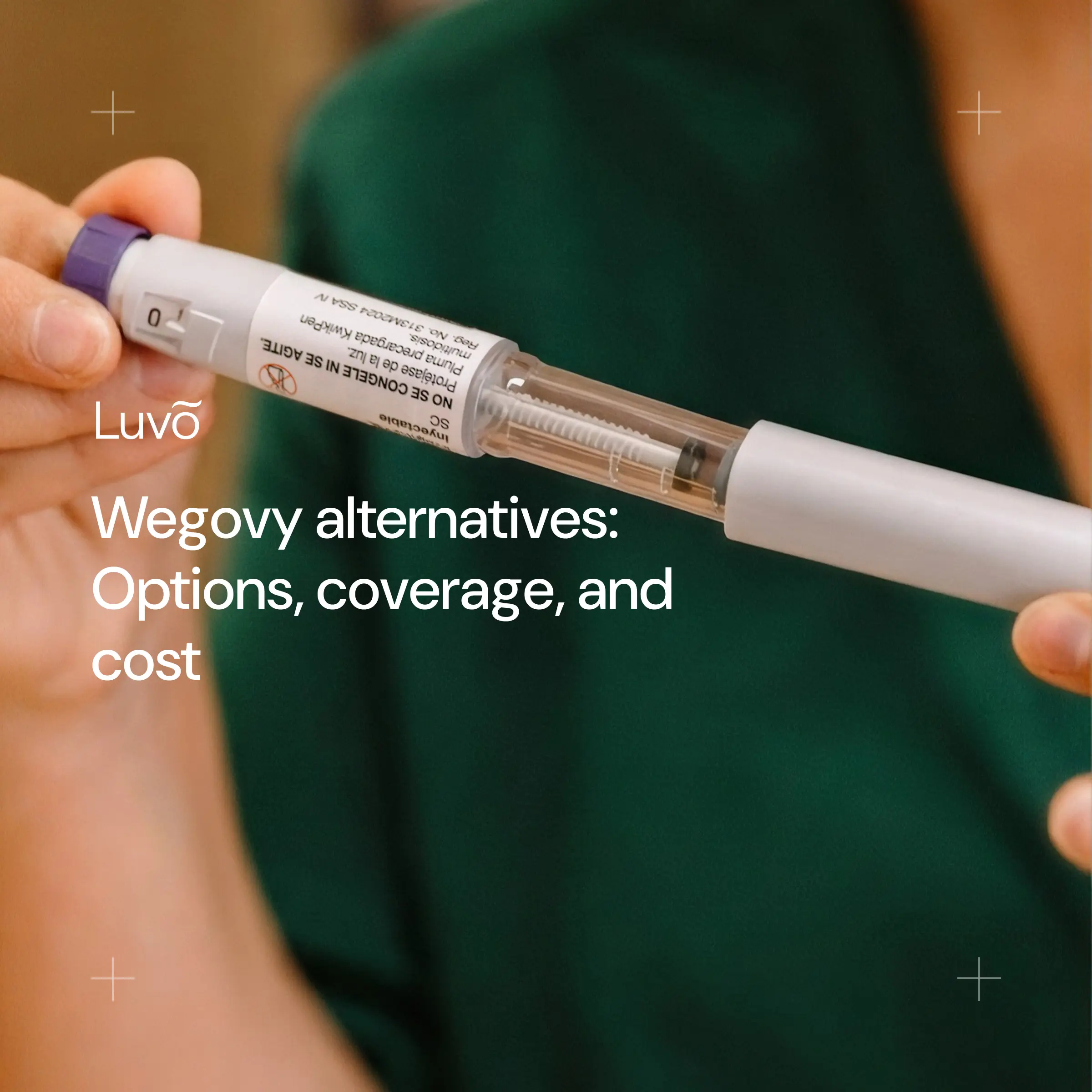
If Wegovy is not working for you as an option, you are not alone in looking around. Cost and insurance are the two reasons people most often go searching, and the alternatives fall into a few clear groups once you know what you are looking at.
This article walks through those groups: other branded GLP-1 medications, compounded formulations, oral forms, and the products marketed over the counter. It is educational and not medical advice. Which option suits you, if any does, is a decision for a licensed provider who knows your history.
Three reasons come up again and again.
Cost. Branded weight management medications carry high list prices, and what you actually pay depends heavily on your plan.
Insurance. Many plans cover GLP-1 medications for type 2 diabetes but exclude them for weight management, or cover them only after you meet specific criteria. A denial for weight management is not a denial of the drug itself, and that distinction sends a lot of people looking for another route.
Tolerability or fit. Some people do not get on well with a particular medication, or want a different dosing form.
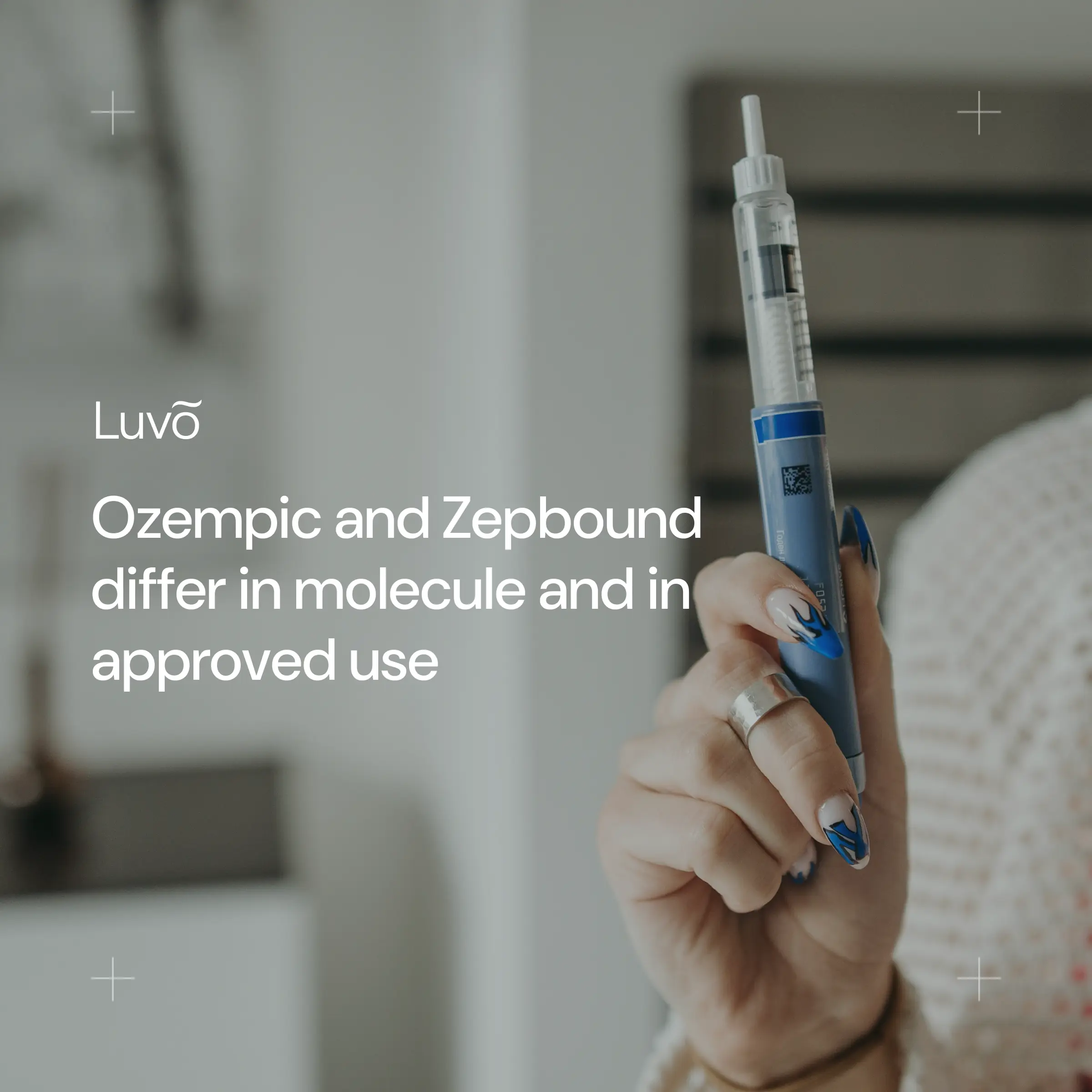
Zepbound contains tirzepatide and is approved for chronic weight management. Tirzepatide acts on two receptors, GLP-1 and GIP, where semaglutide acts on one. In its phase 3 obesity program, tirzepatide produced average body weight reductions between 16.0% and 22.5% depending on dose [1]. For comparison, semaglutide 2.4 mg produced a mean reduction of 14.9% at 68 weeks in its own phase 3 trial [2]. These are separate trials with different populations, so they are a rough guide rather than a head-to-head result.
Ozempic contains semaglutide and is approved for type 2 diabetes, not for weight management. It is sometimes prescribed off-label for weight. Off-label prescribing is legal and common across medicine, but it changes what insurance will pay for and it is a provider's call, not a workaround you can arrange yourself.
Saxenda and liraglutide are older GLP-1 options, taken daily rather than weekly.
Compounded semaglutide and tirzepatide are prepared by licensed compounding pharmacies. They are not FDA-approved, and the FDA does not evaluate them for safety, effectiveness, or quality.
That last point matters more than it sounds. Every efficacy figure in this article comes from trials of the approved products. Those results describe the products that were studied. They do not describe a compounded preparation, which has not been through that review, so a compounded formulation cannot be assumed to perform the way the trial data reads.
Semaglutide also exists in tablet form. Oral dosing has different absorption requirements and a different daily routine than a weekly injection. If needles are the obstacle rather than the medication, this is the category worth asking about.
Older weight management medications work through different mechanisms entirely: appetite suppressants, absorption blockers, and combination products. They generally produce smaller average weight reductions than the GLP-1 class, but they are often covered when GLP-1s are not, and some people tolerate them better.
Coverage varies so much by plan that no article can tell you your answer. The patterns are worth knowing anyway.
Diabetes indications are covered far more often than weight management indications. Many employer plans carve out weight loss drugs specifically.
Prior authorization is standard. Expect your provider to have to document a BMI threshold, weight-related health conditions, and often a documented attempt at lifestyle intervention first. This paperwork is normal and is usually the difference between a denial and an approval.
Step therapy is common. Some plans require you to try a lower-cost medication before they will approve a GLP-1.
Appeals work more often than people expect. A first denial is not the end of the process. Your provider's office usually handles this.
The practical move is to call the number on your insurance card and ask two specific questions: is this drug on the formulary, and is it covered for weight management or only for diabetes.
What you pay is shaped by several things at once, and it is worth separating them.
Your coverage is the single biggest factor. A covered medication with a copay and an uncovered one at cash price are different orders of magnitude.
Manufacturer savings programs exist for the branded products and can reduce cost substantially for people with commercial insurance. They generally exclude people on government plans. These are published on the manufacturers' own sites and are worth checking directly.
Direct-purchase options from manufacturers have expanded, offering cash-pay pricing on approved products outside the insurance system.
Dose and form affect cost, since pricing is often tied to strength.
Subscription telehealth services bundle the provider review with the medication, which makes the monthly number easier to compare but means you should read the renewal terms before you sign up.
A lower price is not by itself a reason to choose something. The question to bring to a provider is which option is appropriate for you, then what it costs.
There is no over-the-counter equivalent of a GLP-1 medication. None. Semaglutide and tirzepatide are prescription drugs, and nothing sold on a shelf or through a supplement site is the same class of thing.
What is actually being sold under GLP-1 adjacent marketing:
If a product is available without a prescription and claims GLP-1 results, treat the claim as marketing.
Like any prescription medication, the options in this article carry risks and possible side effects that a provider will review with you.
The decision is not really a ranking. A provider looks at your medical history and other conditions, medications you already take, your insurance situation, whether you have a preference about injections, how you have responded to anything you have tried, and your tolerance for the gastrointestinal effects common to this drug class.
That is why the first step is a review rather than a selection.
What is the difference between a compounded formulation and an approved product?
An approved product has been through FDA review for safety, effectiveness, and manufacturing quality, and is made to a specification the agency evaluated. A compounded preparation is made by a licensed compounding pharmacy and has not been through that review. The FDA does not evaluate compounded drugs for safety, effectiveness, or quality. That is a difference in regulatory status, and it means published trial results for an approved product should not be read as describing a compounded one.
Can I switch from Wegovy to something else?
Switching between weight management medications is common and is done with provider guidance. Dose equivalence is not straightforward across different molecules, so a provider will usually restart a titration rather than match your current dose.
Will insurance cover a compounded formulation?
Generally not. Insurance formularies are built around approved products, and compounded preparations sit outside them.
What is the closest over-the-counter option?
There is not one. No supplement or non-prescription product is an equivalent to a prescription GLP-1 medication, whatever the packaging says.
If any of this sounds like what you are dealing with, the next step is a conversation with a licensed provider who can review your history and decide whether treatment makes sense for you. Nothing is prescribed or shipped without that review.
Explore Luvo's Weight Loss Program.
This article is for general educational purposes and is not medical advice. It is not a substitute for a conversation with a licensed healthcare provider about your own health. Prescription treatments require provider review and approval. Individual results vary.
Compounded medications are prepared by a licensed compounding pharmacy and are not FDA-approved. The FDA does not evaluate compounded drugs for safety, effectiveness, or quality. Combination formulations are not approved as combinations.
This article does not provide calorie, macronutrient, or portion targets. If tracking food or restricting intake causes you distress, bring it up with a clinician before making changes.
All brand names are the trademarks of their respective owners. Luvo Health is not affiliated with, endorsed by, or sponsored by any of them.








.webp)
.webp)