

May 22, 2026
⋅
3
min read



Growth hormone production naturally declines with age. This is a normal part of how the endocrine system changes over time, not a disease, and it's one of the most common reasons people begin reading about HGH and growth hormone.
This article explains what that decline is and how sermorelin, a provider-prescribed medication, works. It's educational. It isn't medical advice, and it doesn't promise any particular outcome.
Growth hormone is produced by the pituitary gland, a small structure at the base of the brain. The hypothalamus sends a signal, growth hormone-releasing hormone (GHRH), and the pituitary responds by releasing growth hormone in natural pulses rather than continuously.
That pulsatile pattern, and the feedback system that regulates it, is central to understanding the difference between the two approaches below.
One approach is to inject synthetic growth hormone directly. This adds the finished hormone from outside, bypassing the body's own control mechanisms. In specific diagnosed medical conditions it is a legitimate prescription therapy, and it's also the approach most associated with unregulated sources.
The other approach works with your own pituitary gland, prompting it to produce and release growth hormone through your body's existing signaling system. Sermorelin falls into this second category.
Describing this distinction is education, not a claim about results.
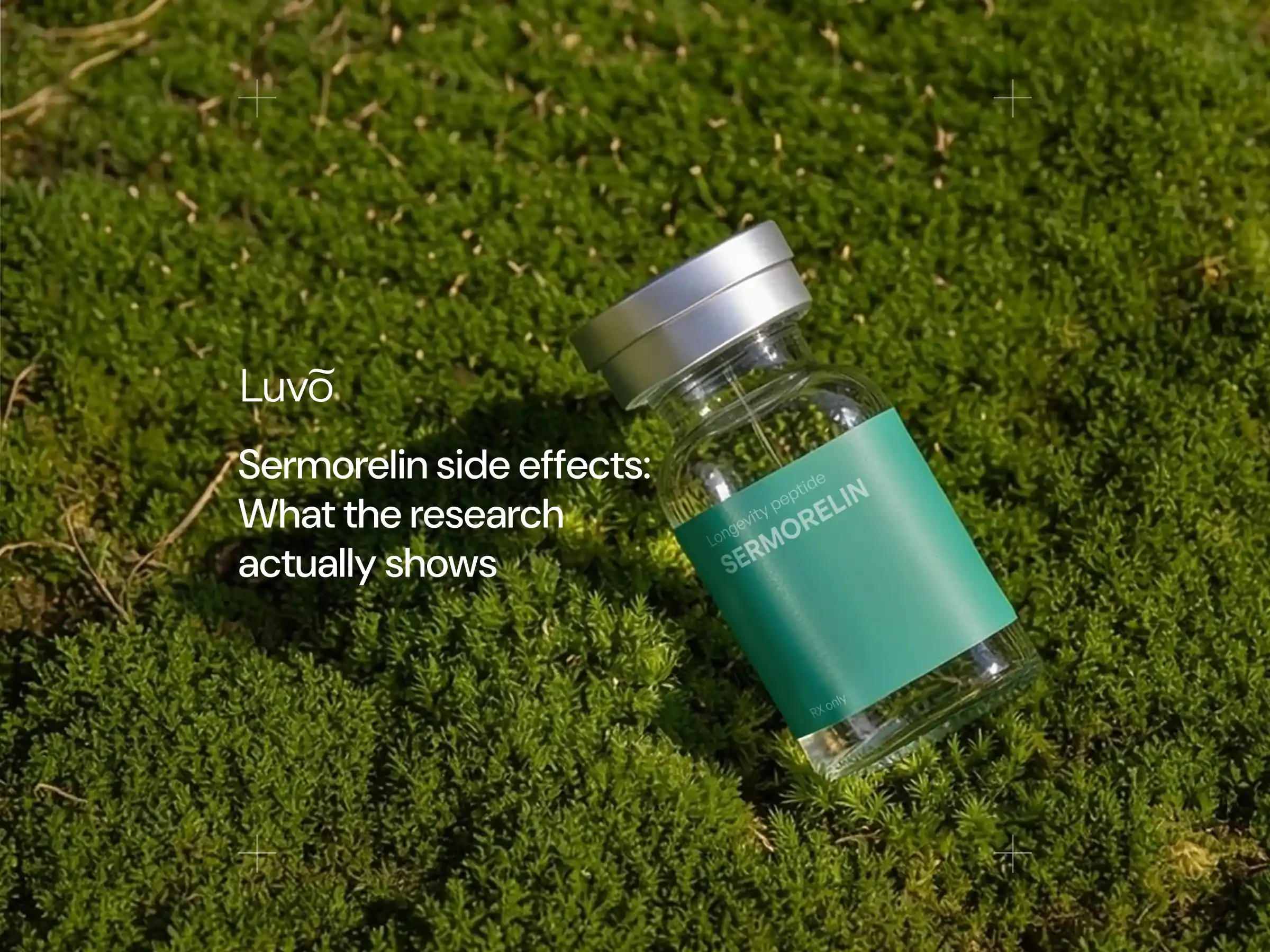
Sermorelin is a growth hormone-releasing hormone (GHRH) analog. It mimics the natural signal the hypothalamus sends to the pituitary.
Because it works through your body's own machinery rather than replacing it, several things follow from the mechanism. Release stays pulsatile, in the natural bursts the body is designed to produce. Your own feedback controls remain in the loop, since the pituitary retains control of how much is released. And the approach is built around supporting natural hormone production rather than overriding it.
This is a description of mechanism. It is not a promise of a specific effect, and we won't attach benefit claims or timelines to it. Our piece on what the research does and doesn't show over time goes through the evidence and its limits.
Sermorelin was once an FDA-approved medication, marketed as Geref. In 2008 the manufacturer discontinued it for business reasons, not because of a safety problem. That distinction matters: the withdrawal was a commercial decision.
Today sermorelin is available as a compounded medication, prepared by a licensed compounding pharmacy for an individual patient based on a provider's prescription. To be clear about what that means: compounded sermorelin is not FDA-approved. A licensed provider explains this before anything is prescribed.
Sermorelin is available only with a prescription from a licensed provider. You share your health history and goals, a provider reviews that information and determines whether sermorelin is an appropriate option for you, and if it is, they discuss the approach with you, including its compounded and non-FDA-approved status, before prescribing. Luvo's evaluation is based on your health history and goals; it does not include lab testing.
Whether this is right for you is a clinical question. The next step is a conversation with a licensed provider who can review your health history and goals and decide whether sermorelin is an appropriate option. Nothing is prescribed or shipped without that review.
Explore Luvo's Longevity Program.
This article is for educational purposes only and is not medical advice. Sermorelin is available only through a prescription from a licensed provider, and compounded sermorelin is not FDA-approved. Always consult a licensed healthcare provider to determine whether any treatment is appropriate for you.






.webp)

.webp)
.webp)
.webp)