March 13, 2026
⋅
3
min read


Starting a GLP-1 medication is unfamiliar territory for most people. This guide covers what the early phase tends to involve and the mistakes that are easiest to avoid. It assumes you've already been through eligibility screening with a clinician.
It's general educational information rather than medical advice, and individual experiences vary.
When you're eating less overall, the quality of what you eat matters more. Prioritizing protein and fiber and choosing nutrient-dense foods helps. Protein first at meals is a practical rule that works for most people.
If eating becomes difficult or distressing, or you find yourself restricting heavily, tell your clinician. That's more important than any nutrition rule.
When you're eating less overall, the quality of what you eat matters more. Prioritizing protein and fiber and choosing nutrient-dense foods helps. Protein first at meals is a practical rule that works for most people.
If eating becomes difficult or distressing, or you find yourself restricting heavily, tell your clinician. That's more important than any nutrition rule.
Mild nausea, constipation, or stomach discomfort can occur and are usually manageable.
Some symptoms are different in kind and need medical attention: severe or persistent vomiting, signs of dehydration, or severe abdominal pain. Don't push through serious symptoms, and don't wait to see whether they pass.
Weight change is rarely linear, and a plateau doesn't necessarily mean treatment has failed. It usually indicates that something needs adjusting, whether habits, intake quality, activity, or clinical strategy. As weight decreases, the body adapts and energy needs shift, so plateaus are expected rather than a sign of failure. A structured review of the basics, with your care team, is usually more useful than a sudden or drastic change.
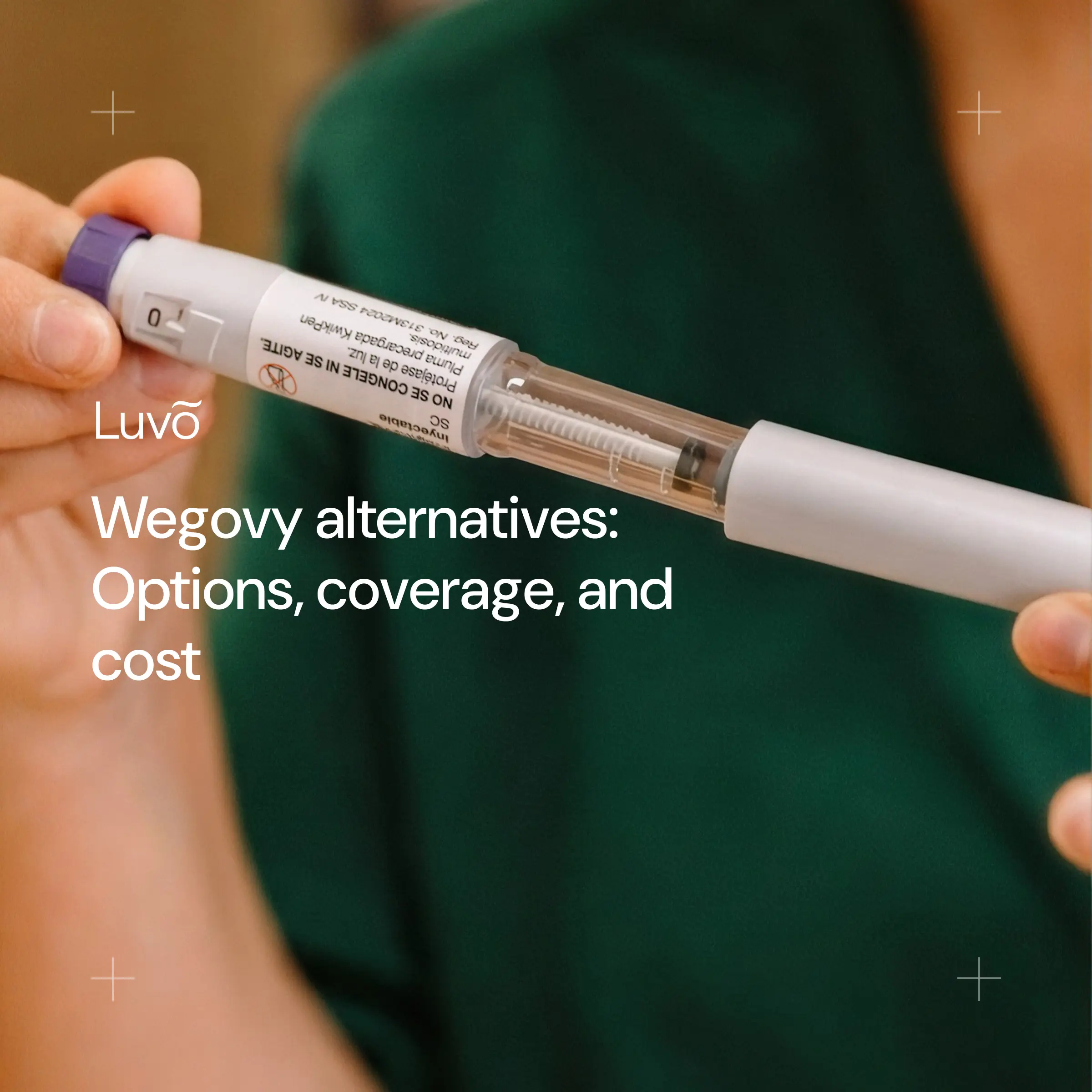
If you're using a vial and syringe, measuring correctly is critical, and confusion between milligrams and syringe units is a known source of error. If you're not certain how to measure your dose, contact your clinician or pharmacy before injecting. Never adjust your dose yourself.
Medication works best alongside support: follow-ups, nutrition guidance, and a plan for the predictable disruptions, including travel, missed doses, and what happens if you stop treatment. Sorting out that last point early is worth the effort. Weight management tends to be a long-term effort rather than a short course, and appetite often returns toward its previous patterns after stopping, so a maintenance plan made with your provider matters as much as the start.
Explore Luvo's Weight Loss Program.
This article is for educational purposes only and is not medical advice. Some formulations are compounded and not FDA-approved. Always consult a licensed healthcare provider about your treatment, and do not adjust your dose without clinical guidance.









.webp)
.webp)