October 27, 2026
⋅
5
min read


Sermorelin draws interest from women who are curious about the growth hormone system, but most of what is written about it focuses on men. This article covers what is actually known about sermorelin in women: how it works, which studies included women, what the discontinued approved product used for dosing, reported side effects, and reasons it may not be a fit.
It is educational content, not medical advice.
Sermorelin is a growth hormone-releasing hormone (GHRH) analog. It mirrors the first 29 amino acids of the body's own GHRH, the hormone the hypothalamus uses to signal the pituitary gland [1]. Rather than supplying growth hormone directly, it prompts the pituitary to release its own.
That release stays under the body's normal feedback controls [1]. Growth hormone in turn raises insulin-like growth factor 1 (IGF-1), mainly from the liver. Because sermorelin works through the pituitary, it needs a functioning pituitary to have any effect.
The sermorelin prescribed today is compounded. It is not FDA-approved, and the FDA does not evaluate compounded drugs for safety, effectiveness, or quality. Geref's former approval and its trial data do not apply to compounded sermorelin.
Very few. Most sermorelin research was done in children with growth hormone deficiency, the group the original product was approved for [2], and in older men.
One of the few studies that included women gave older men and women nightly injections of a closely related GHRH(1-29) analog for 16 weeks [3]. Growth hormone and IGF-1 levels rose, but the study was small, and responses were not uniform between men and women [3]. Small, short studies like this cannot show long-term outcomes, and they were not designed to set a dose for women.
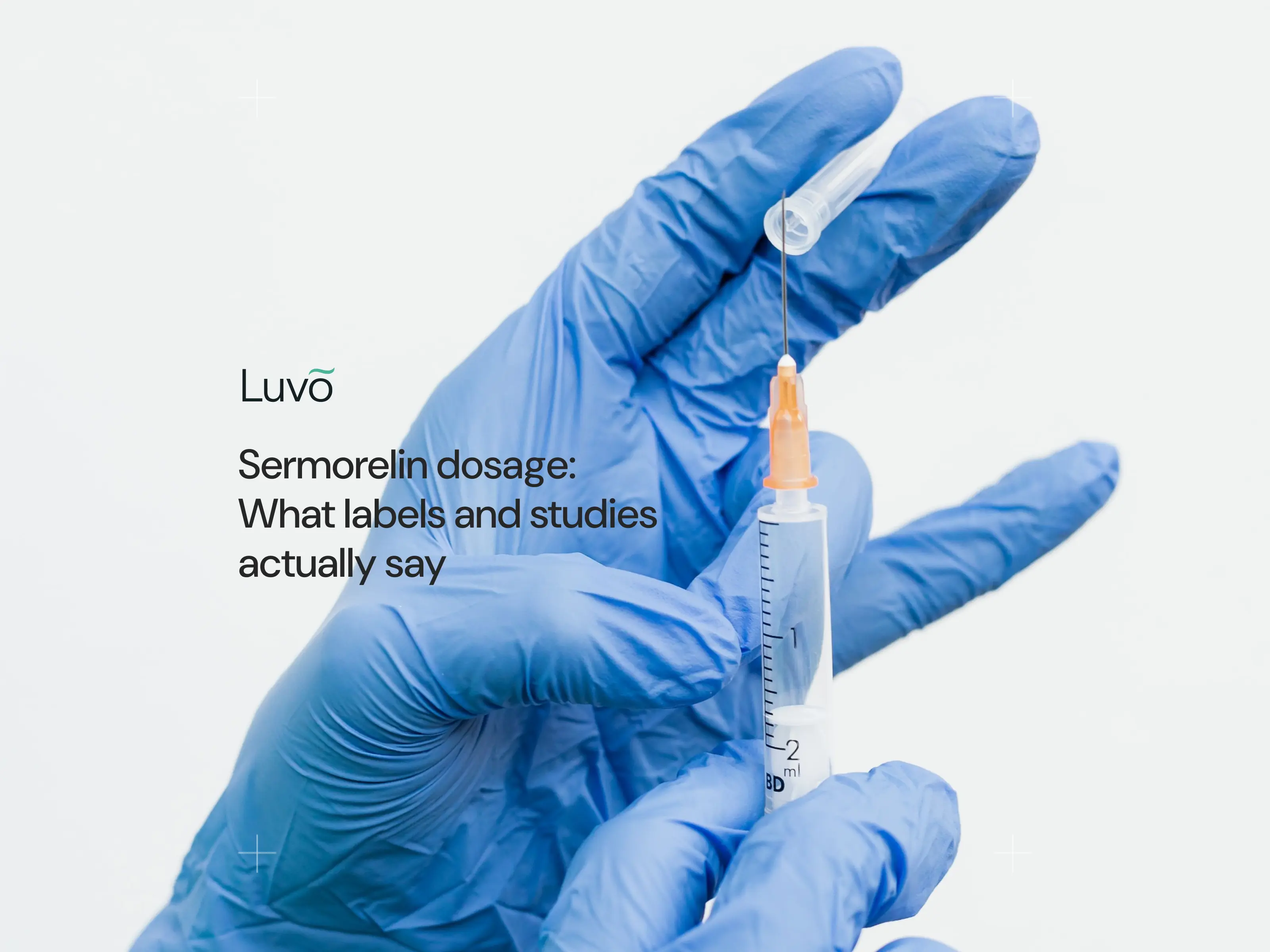
No label has ever set a dose specific to women. The discontinued product, Geref, was approved for children with idiopathic growth hormone deficiency. Its label dose was 30 mcg per kilogram of body weight, injected under the skin once daily at bedtime [2]. That pediatric dose was not established for adults or for women.
Adult studies have used varied doses and schedules, and none was designed to define a dose for women. Research is limited. Your provider determines whether sermorelin is appropriate and, if so, the dose, timing, and how to reassess. Our general article on sermorelin dosage covers how dosing is discussed more broadly.
One factor specific to many women is estrogen. In postmenopausal women, oral estrogen lowered IGF-1 compared with estrogen delivered through the skin [4]. If you use any hormone therapy, tell your provider, since it can affect how the growth hormone system is assessed.
We did not find data that separate sermorelin side effects by sex. Most label safety data come from children. In Geref clinical trials, three of 350 patients stopped treatment because of injection reactions [2]. Injection-site reactions such as pain, redness, or swelling are among the most commonly discussed effects.
Like any prescription medication, sermorelin carries risks and possible side effects your provider will review with you. These are not comprehensive lists of risks or contraindications; patients should review the prescribing information and discuss their medical history with their clinician. Our article on sermorelin side effects goes into more detail.
You may see "before and after" stories about sermorelin online. Those are individual accounts, not evidence, and they do not predict what anyone else will experience.
What research does show is that sermorelin can raise growth hormone and IGF-1 levels in some people [1, 3]. What it does not show is long-term outcomes in women, a validated dose for women, or results that apply to compounded products. If you want to understand who the Longevity Program is designed for, see who should consider the Longevity Program.
Is the dose different for women?
No label sets a different dose for women, and research is limited. Your provider determines dosing, taking into account factors such as any hormone therapy you use [4].
Can sermorelin be used during menopause?
Sermorelin is not a menopause treatment, and research in menopausal women is limited. If you are in perimenopause or menopause and use any hormone therapy, tell your provider, since estrogen can affect IGF-1 levels [4].
Do I need IGF-1 testing?
That is a clinical decision. Luvo does not run labs; any testing would be arranged through your own provider or physician.
Is sermorelin FDA-approved?
Compounded sermorelin is not FDA-approved. The approved product, Geref, was discontinued by its manufacturer, and the FDA determined it was not withdrawn from sale for reasons of safety or effectiveness [6].
If you are curious whether sermorelin could fit your situation, the next step is a conversation with a licensed provider who can review your history and decide whether treatment makes sense for you. Nothing is prescribed or shipped without that review. Any medication preference you indicate is only a starting point for discussion. A licensed clinician independently determines whether prescription treatment is medically appropriate and, if so, which medication, dose, and treatment plan are appropriate based on your clinical evaluation.
Explore Luvo's Longevity Program.
This article is for general educational purposes and is not medical advice. It is not a substitute for a conversation with a licensed healthcare provider about your own health. Prescription treatments require provider review and approval. Individual results vary.
Compounded medications are prepared by a licensed compounding pharmacy and are not FDA-approved. The FDA does not evaluate compounded drugs for safety, effectiveness, or quality.